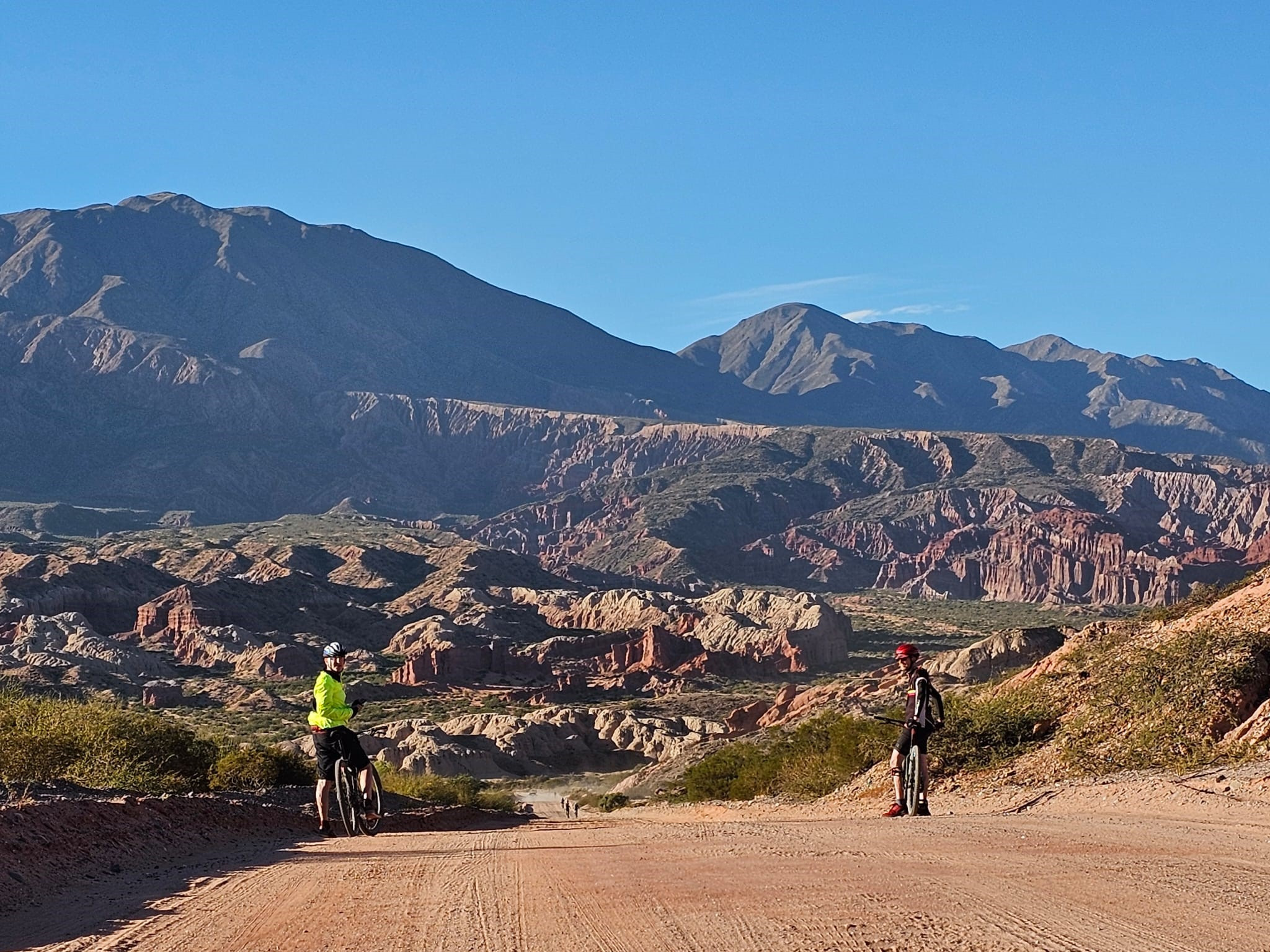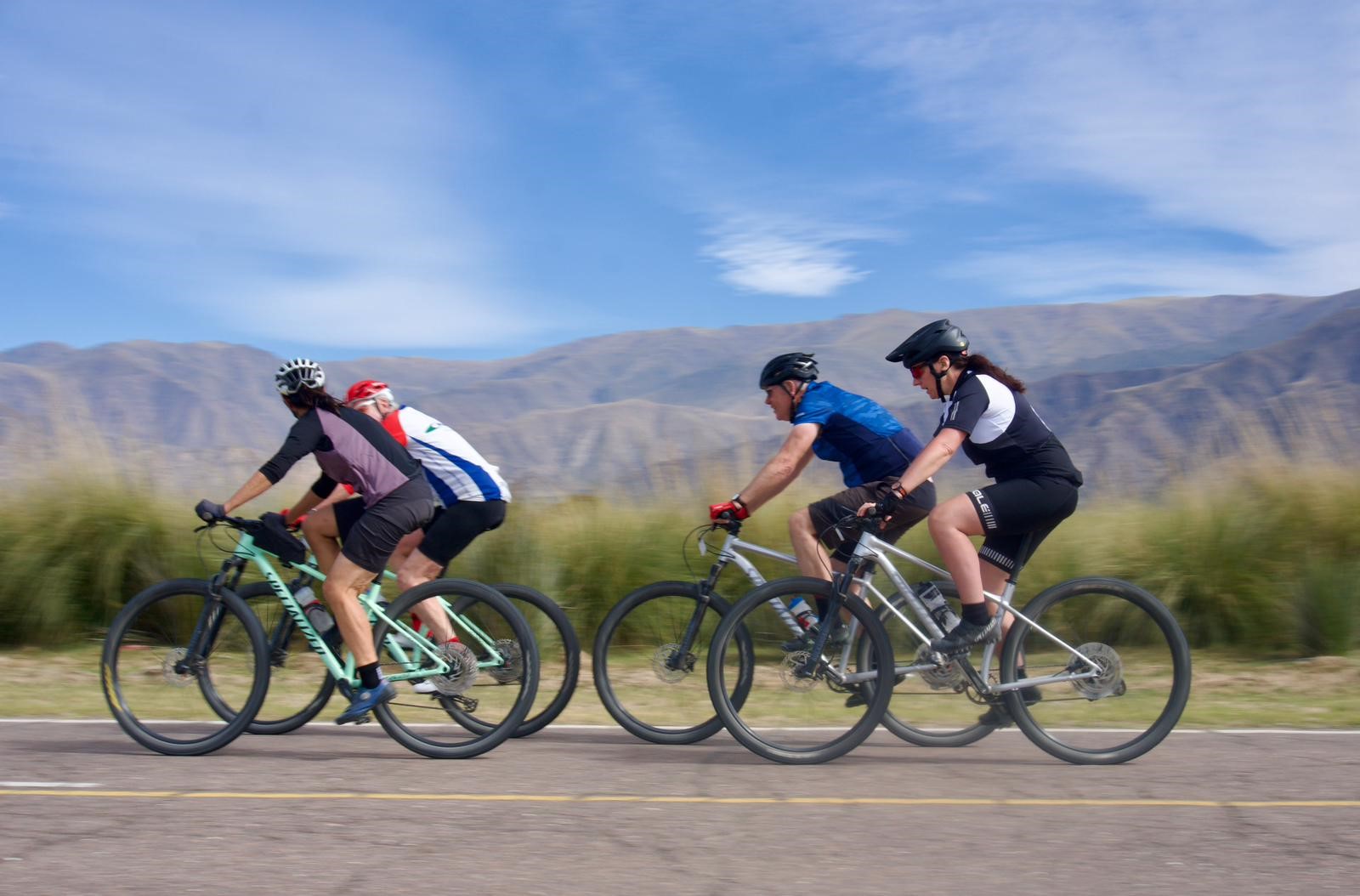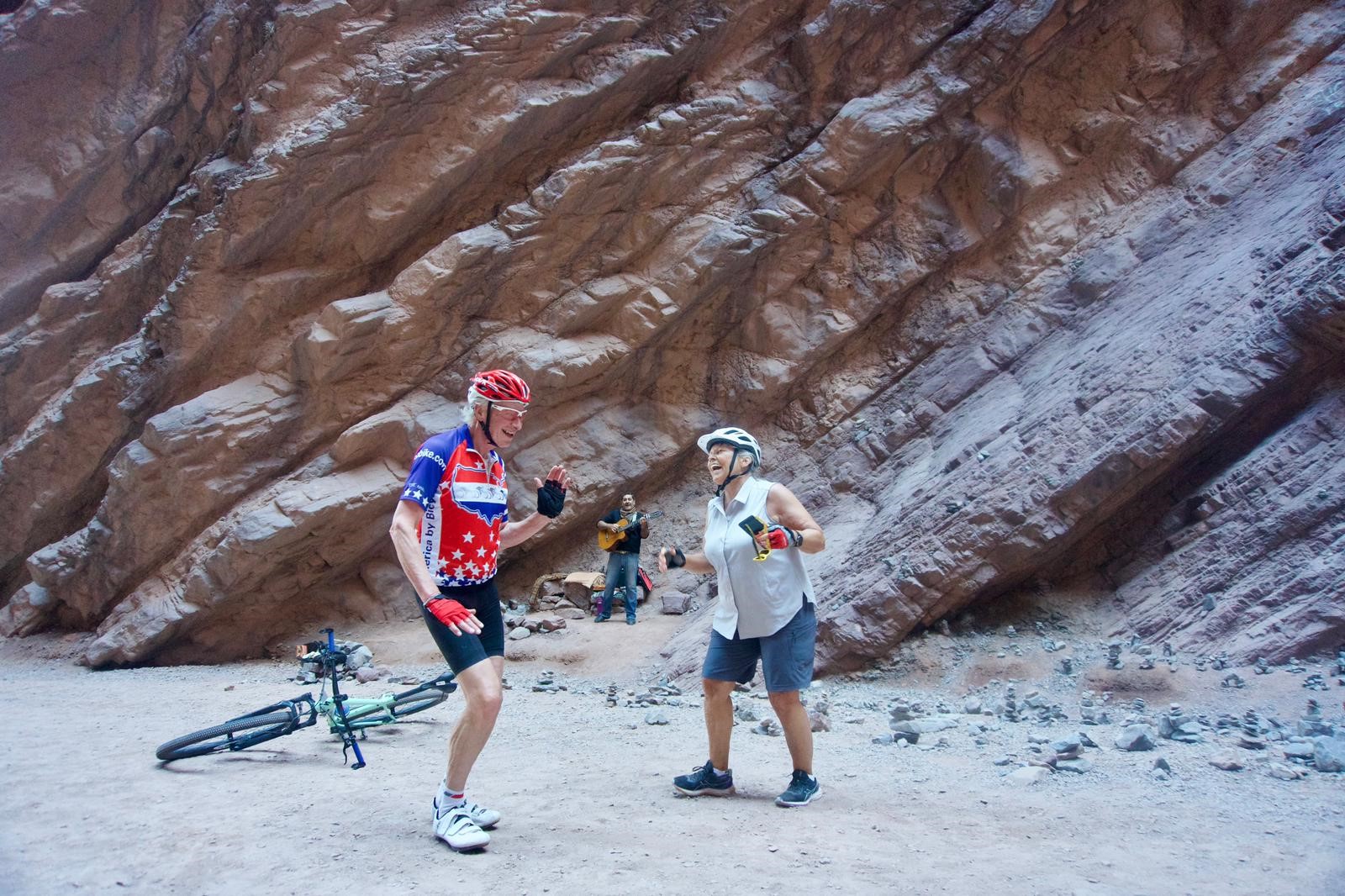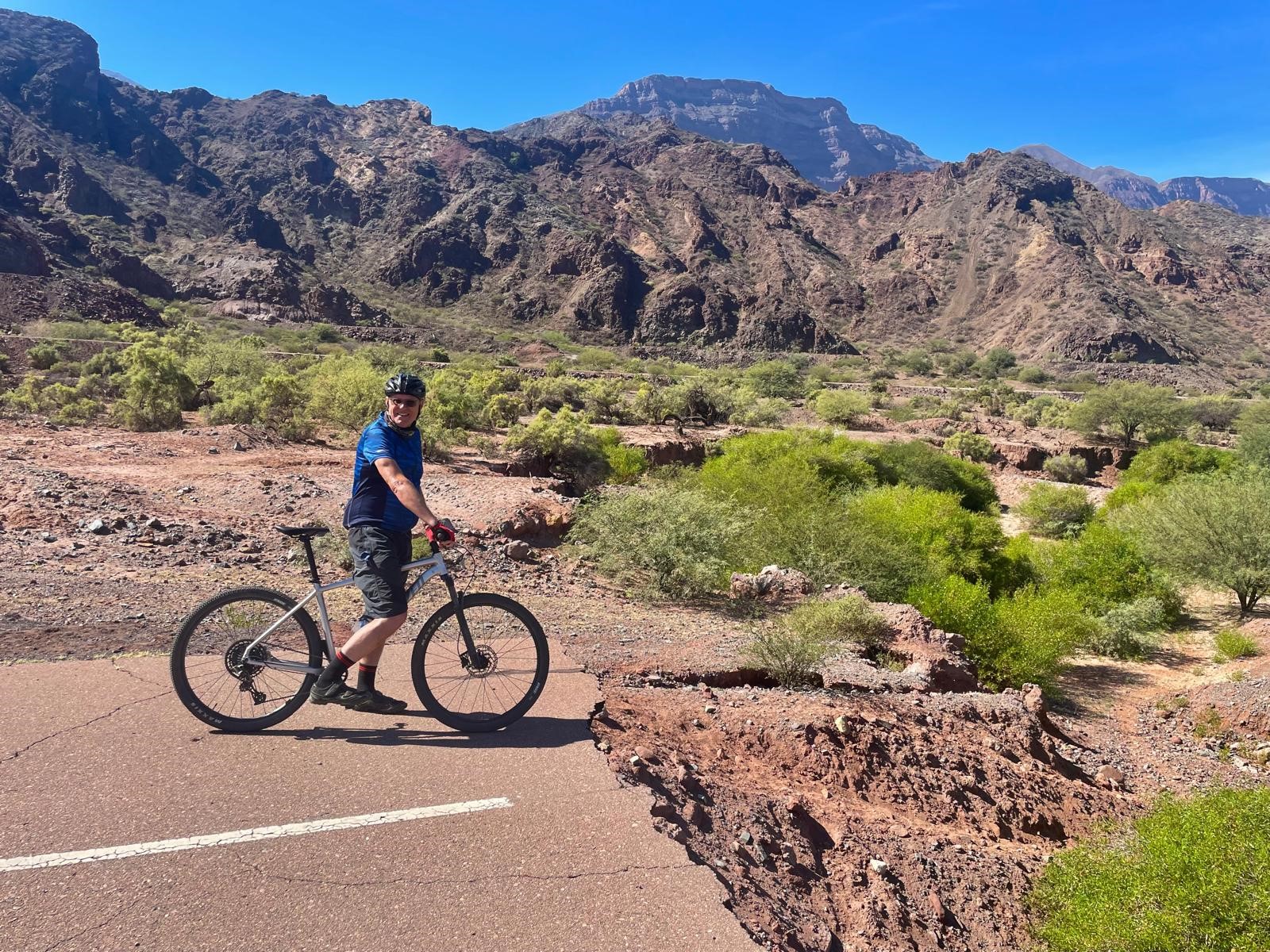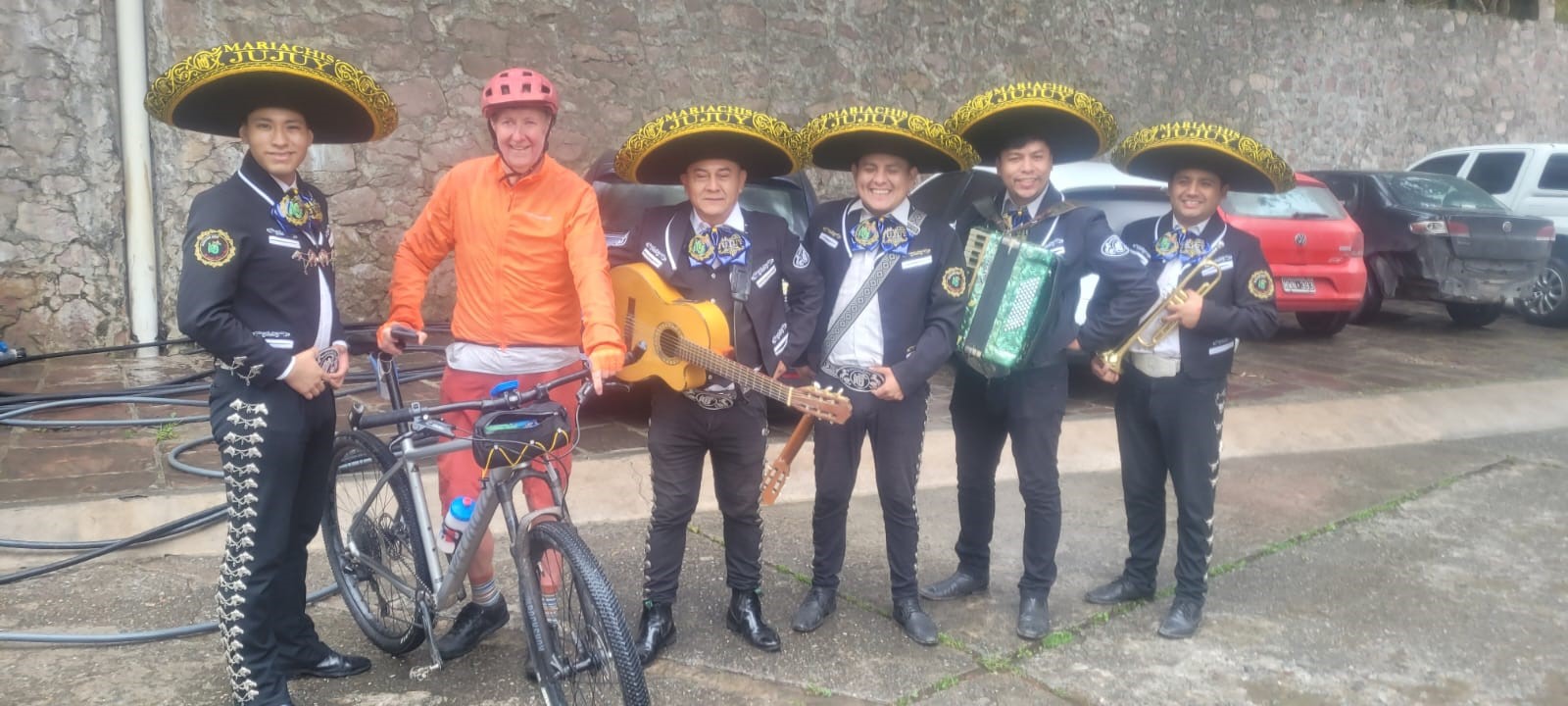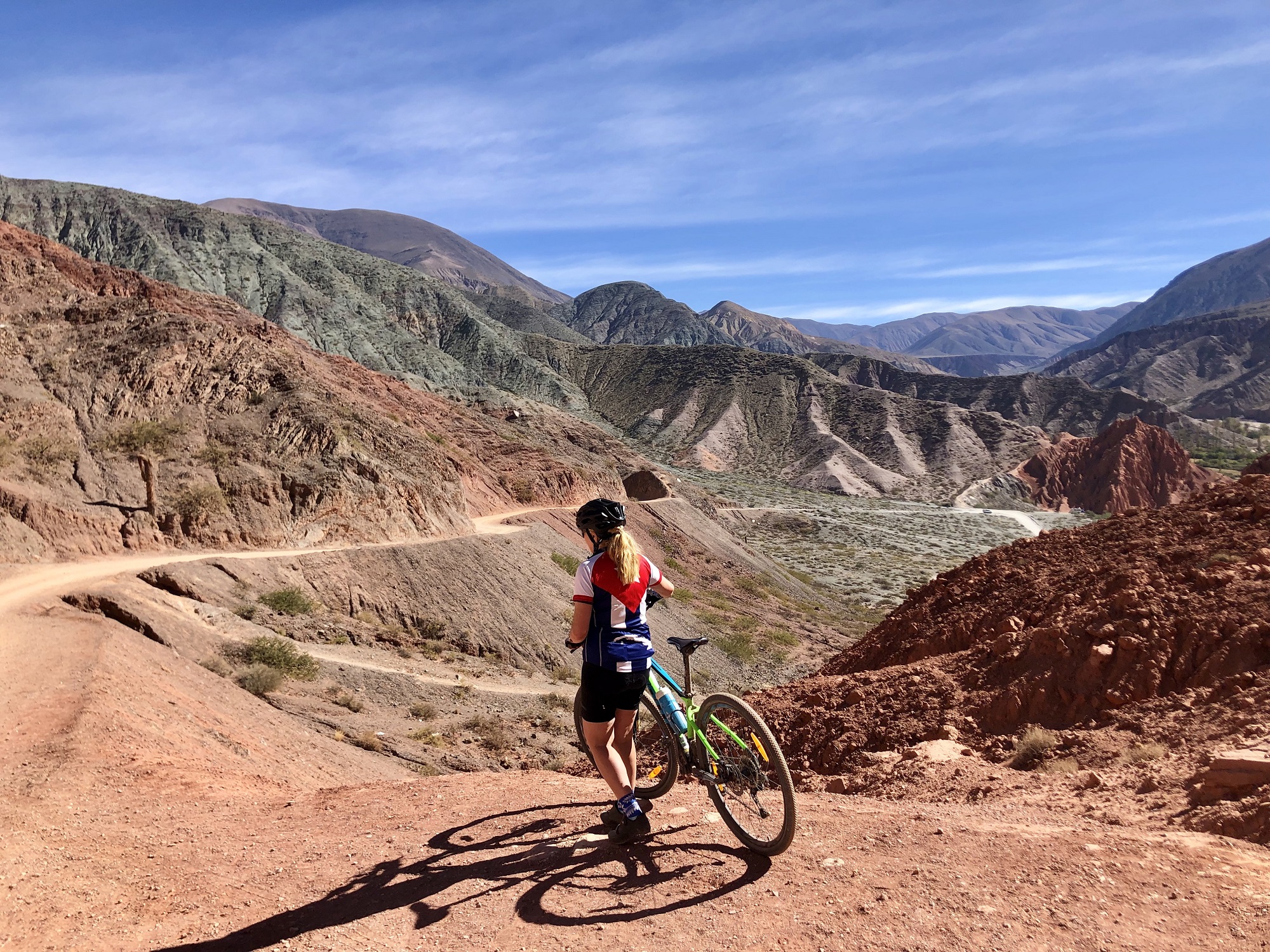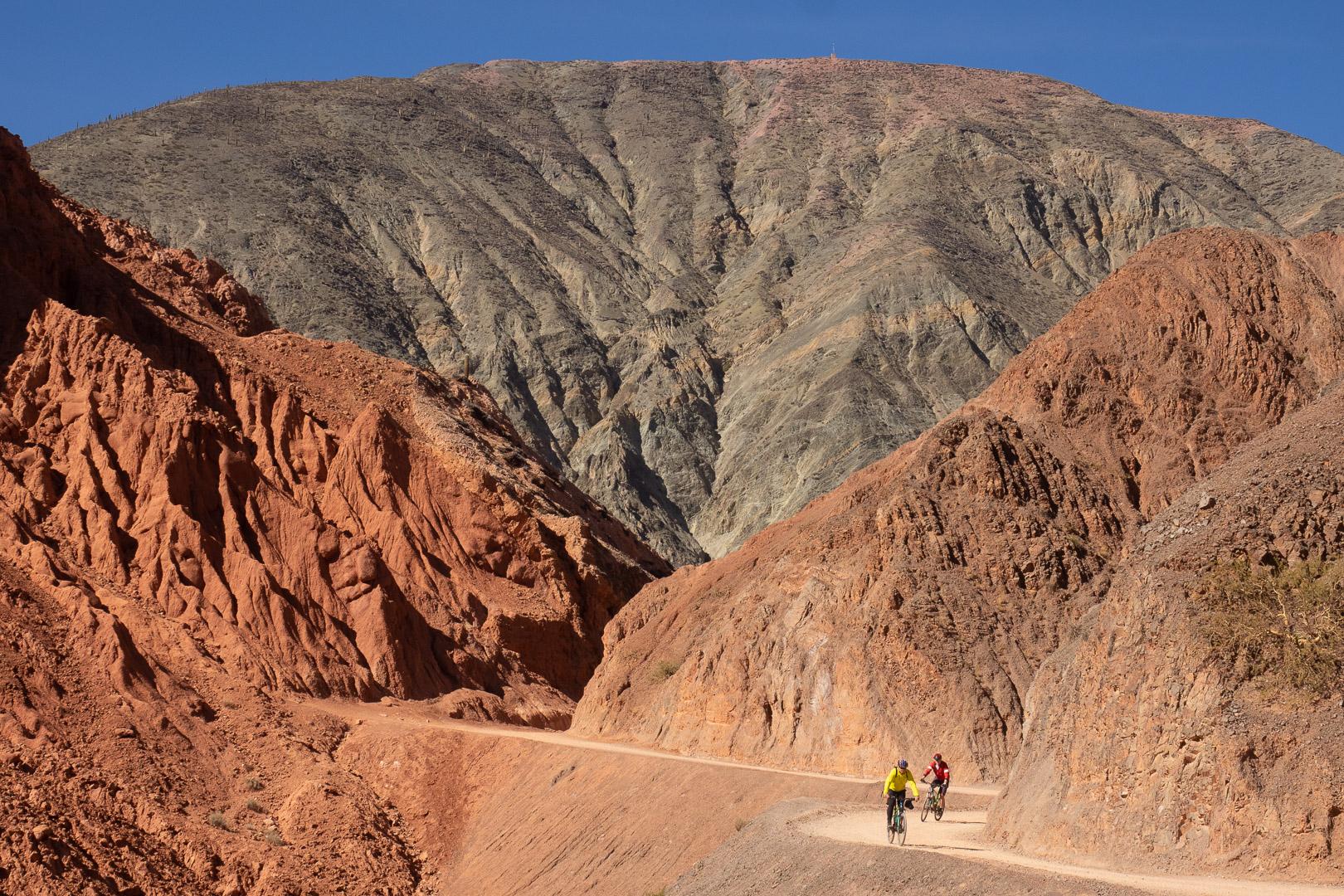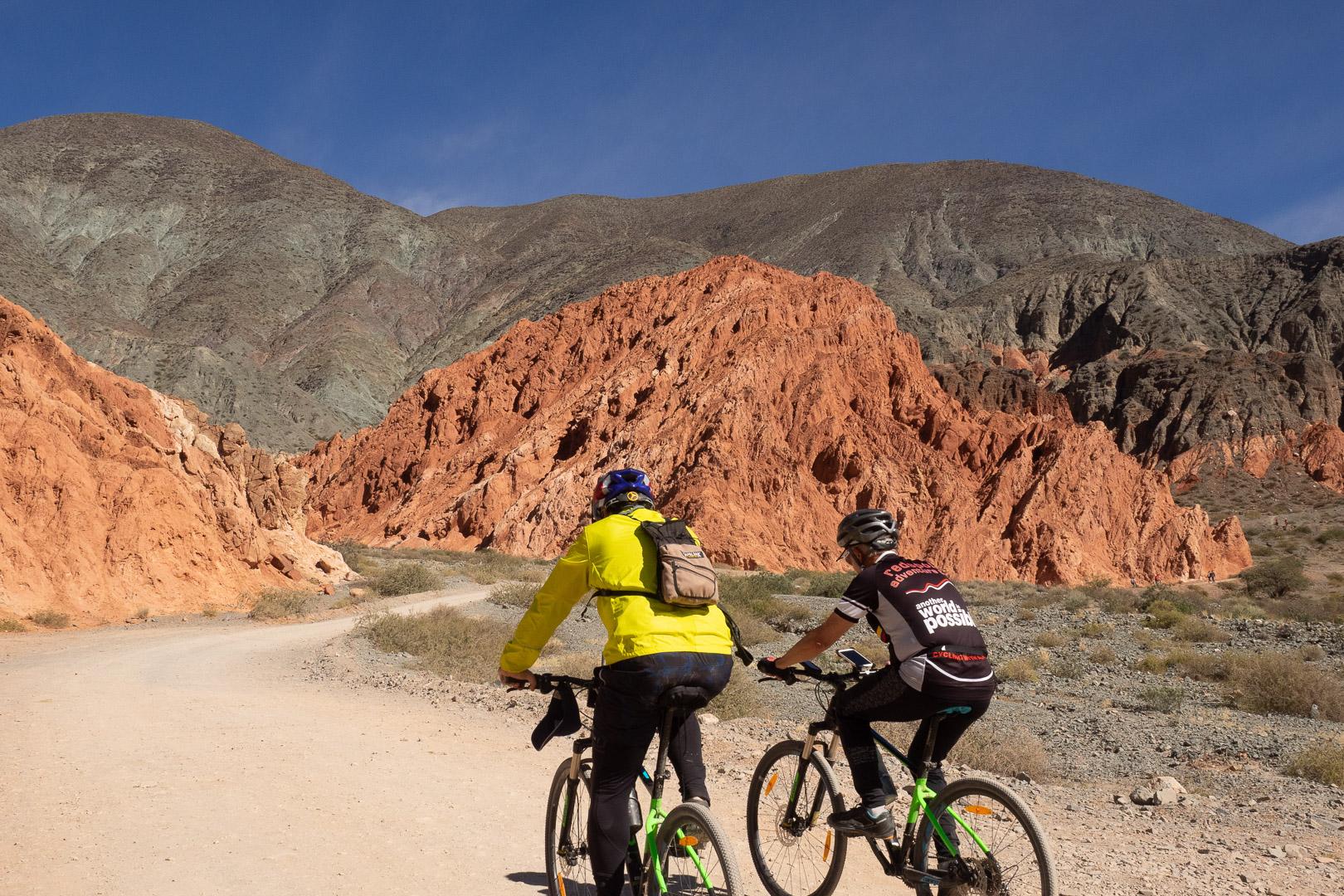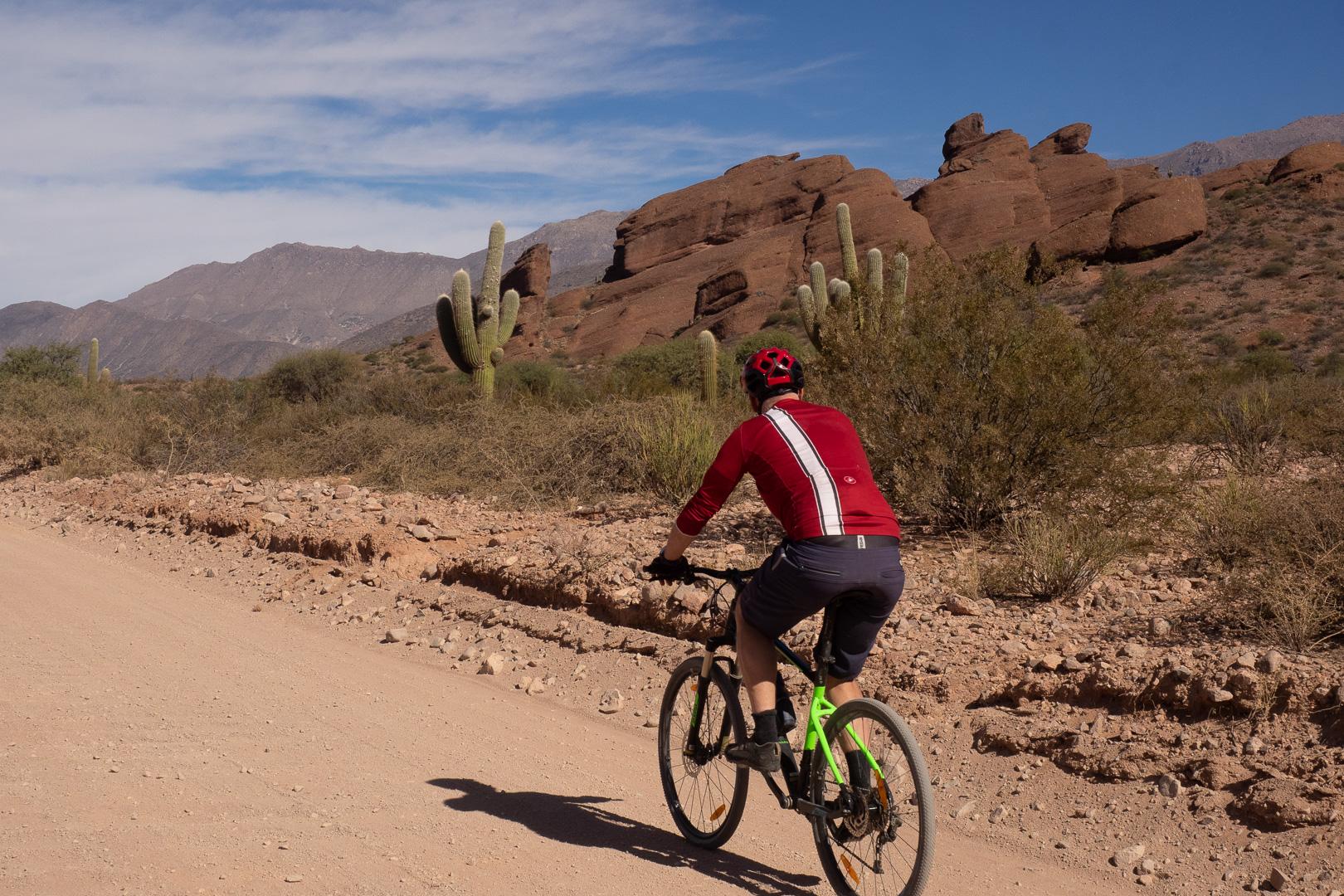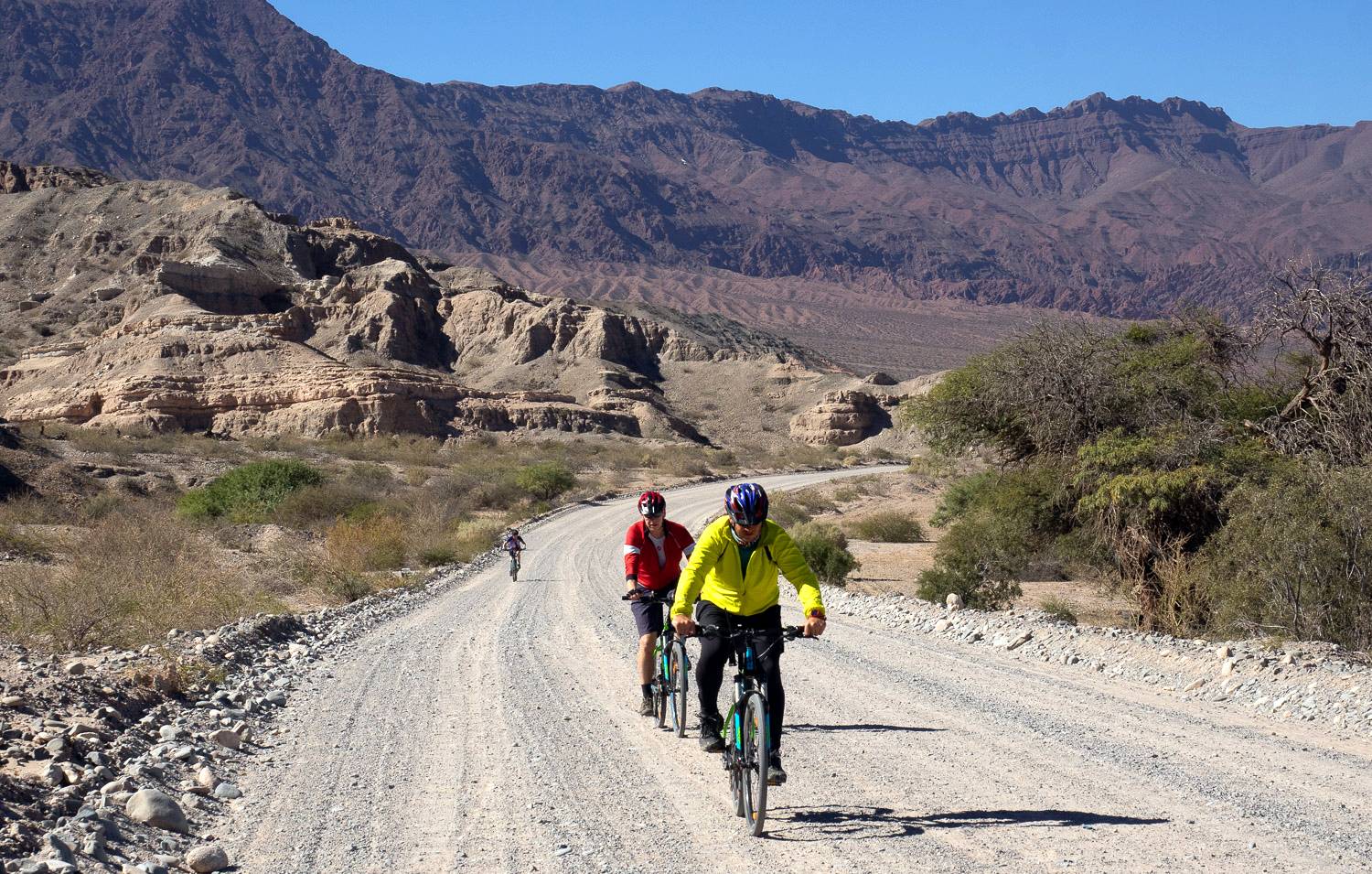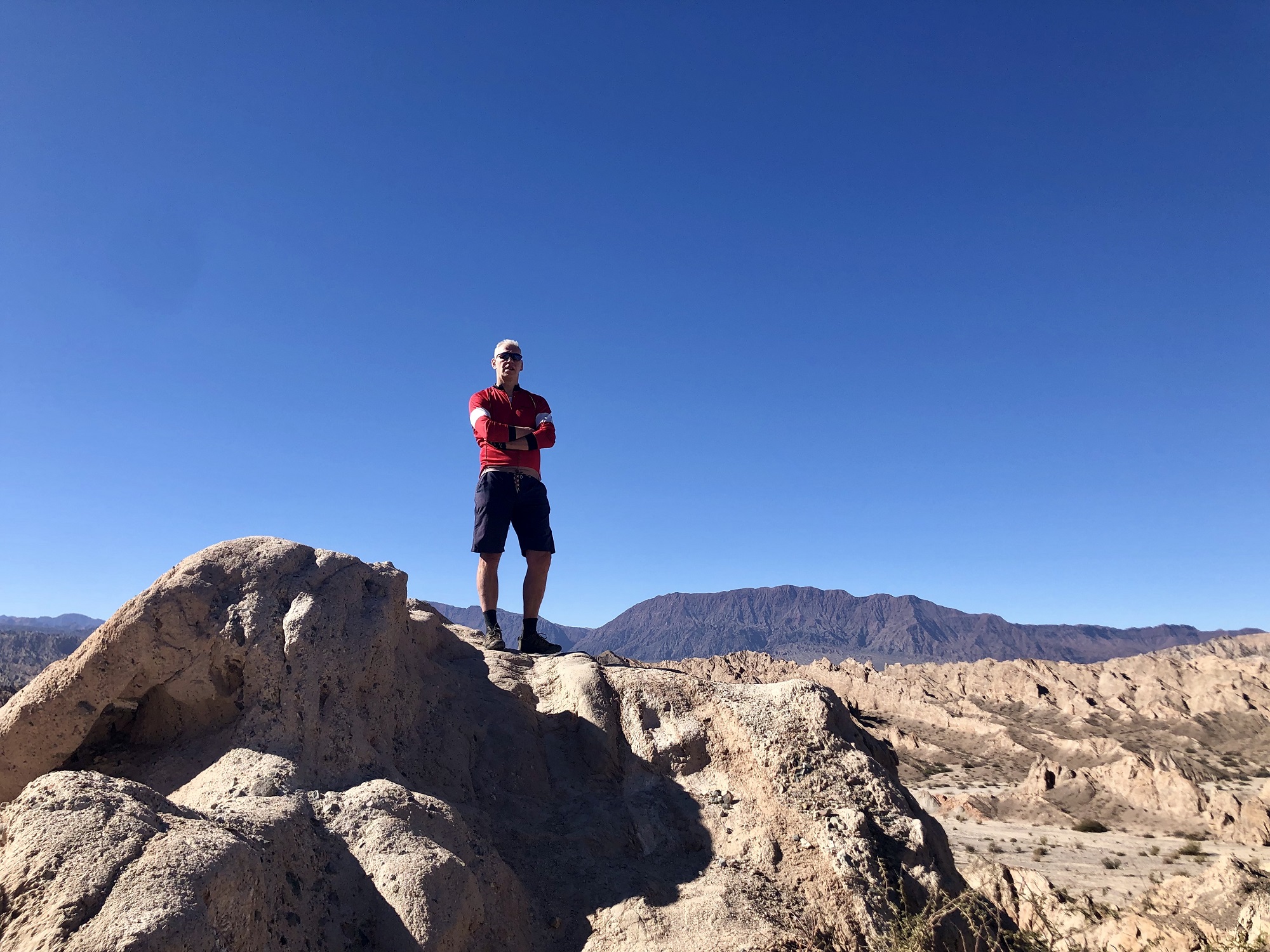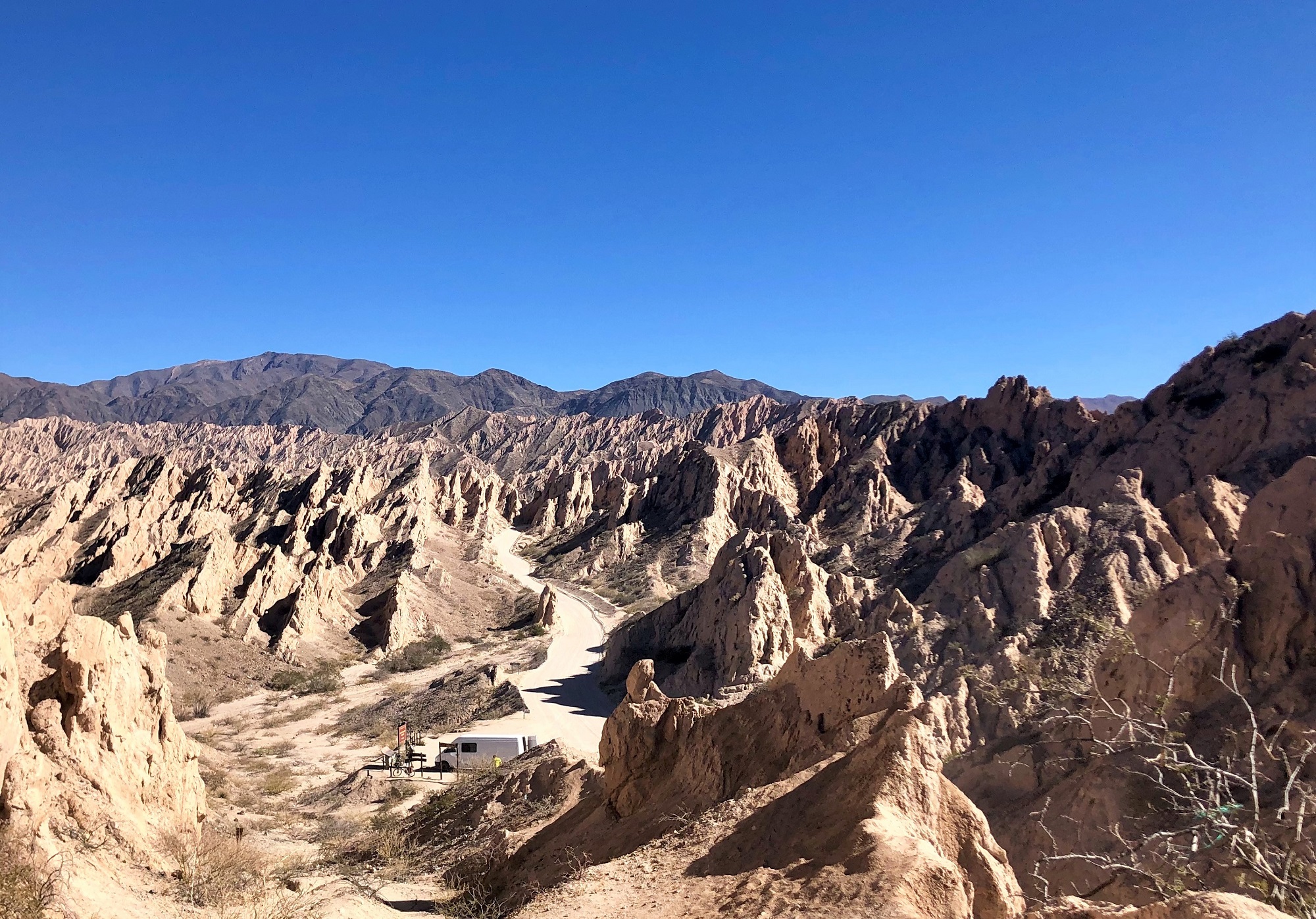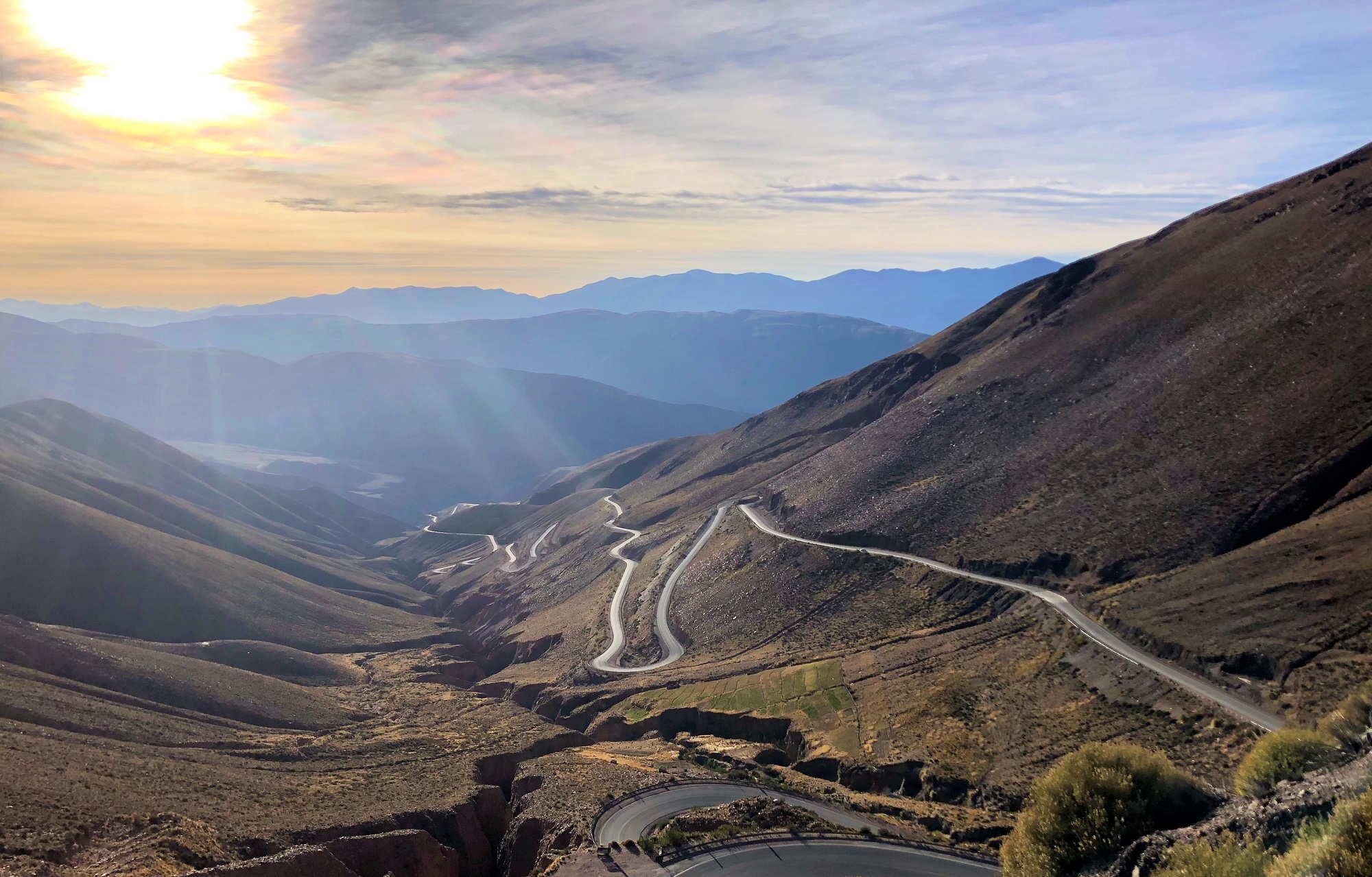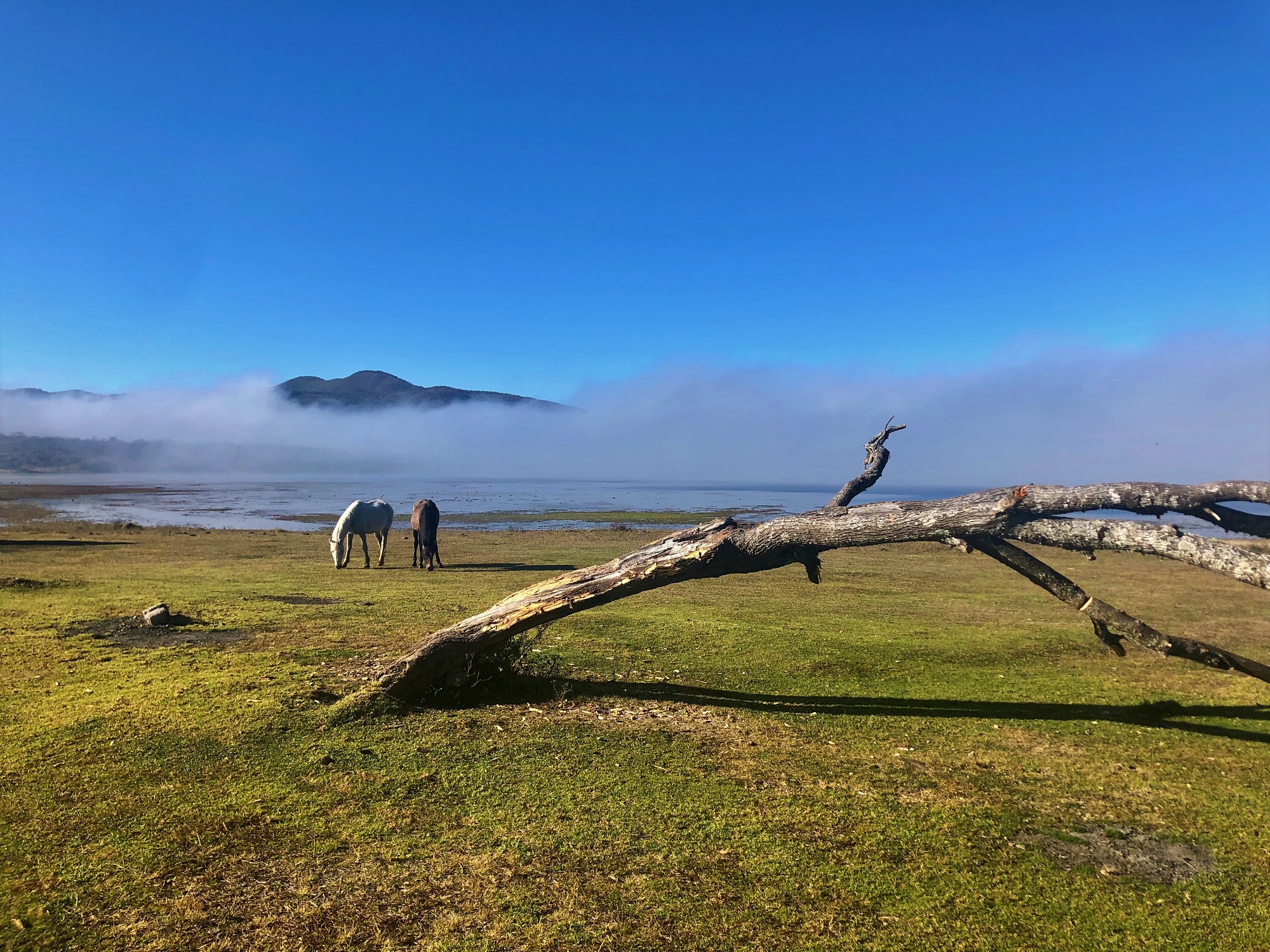





Absolutely excellent. Our leader Alé driver Javi +Sergio and Belé worked together tirelessly to make it so much fun. I want to come back to this delightful country and its people.

- Overview
- Itinerary
- Key Places
- Essential Info
- Accommodation
- Testimonials
- Gallery
- Book Now
Argentina
Favourite
E-bike Option
14 Day Tour
From: £2845
High Andes, Canyons & Salt Flats
Northwest Argentina is a land of extraordinary contrasts, where colourful Andean mountains rise above cactus-filled valleys, high-altitude deserts and immense white salt flats. Beginning and ending in the colonial city of Salta, this cycling journey explores one of South America’s most spectacular and culturally distinctive regions.
The route follows legendary roads, including Ruta 40, travelling through traditional Andean communities, dramatic gorges and UNESCO-listed landscapes. From the vineyards around Cafayate to the dazzling Salinas Grandes and sweeping descents from the high Andes, this is a wonderfully varied cycling adventure through the heart of northern Argentina.
Key Places – Argentina
Salta
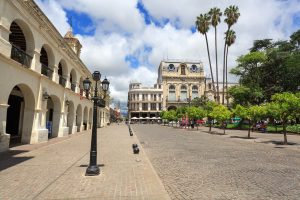
Known as Salta la Linda — “Salta the Beautiful” — this graceful colonial city is the natural starting and finishing point for the North Argentina tour. Around Plaza 9 de Julio, riders can explore the pink-toned Cathedral Basilica, the historic Cabildo and the Museum of High Mountain Archaeology, home to remarkable Inca artefacts. With its leafy squares, ornate churches and warm evening atmosphere, Salta offers a gentle introduction to the culture, history and music of Argentina’s northwest.
Salta is also a city with a strong sense of place. From San Bernardo Hill there are sweeping views across the valley, while the city’s traditional peñas bring together folk music, local food and gaucho culture. It is a lovely contrast to the remote landscapes of the cycling route — lively, historic and full of character.
Salinas Grandes & Purmamarca
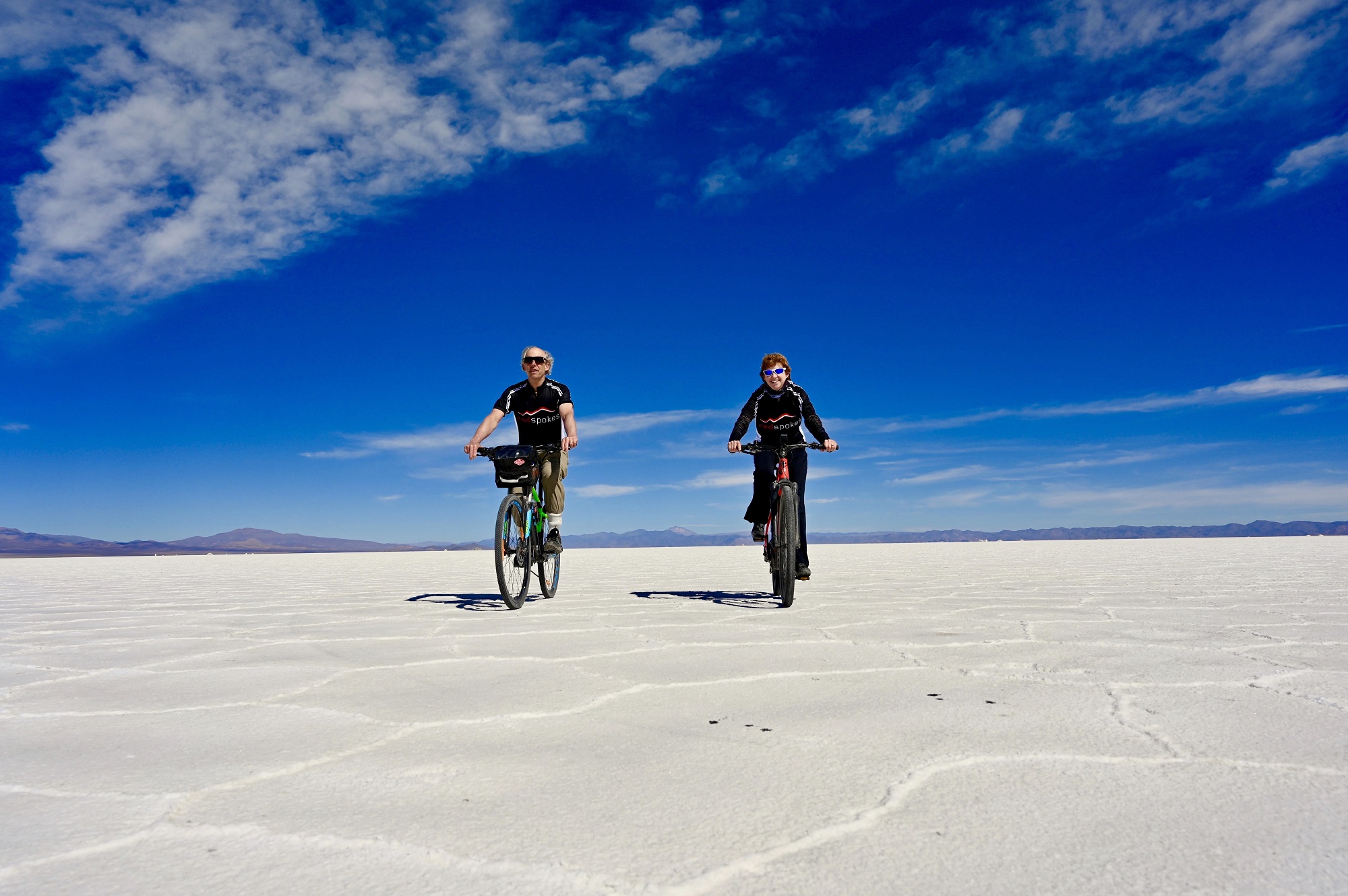
Salinas Grandes is one of the great visual highlights of the tour: a vast white salt flat set high on the Puna, framed by mountains and an intensely blue Andean sky. Cycling across this bright, open landscape gives riders a real sense of the scale and remoteness of northwest Argentina. The stark contrast between salt, sky and mountains makes this one of the most photogenic sections of the itinerary.
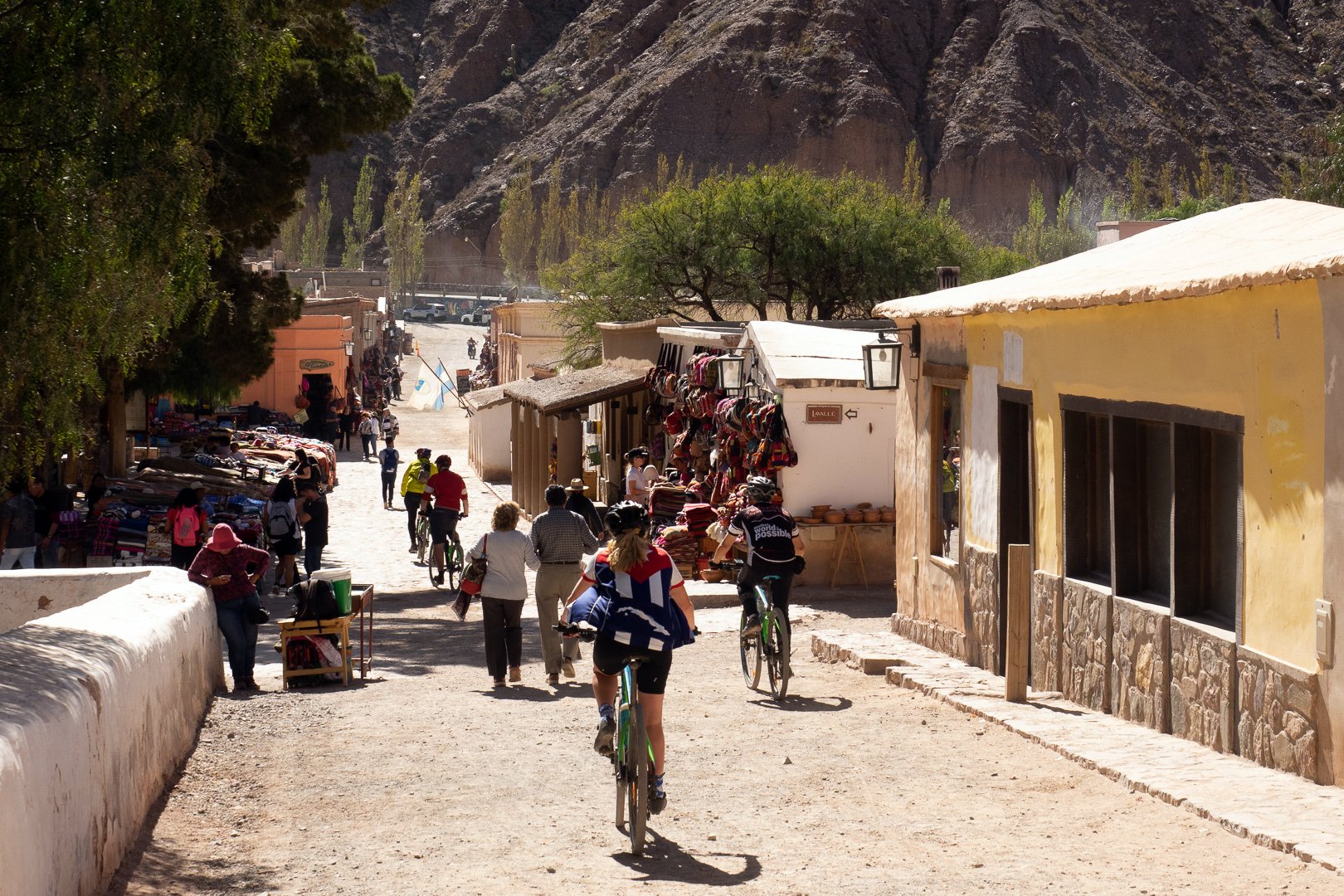
The day also links beautifully with Purmamarca, a small adobe village set beneath colourful hills. After the salt flats, the ride descends the dramatic Lipán road back towards Purmamarca, dropping from high-altitude puna to warmer valley scenery. Together, Salinas Grandes and Purmamarca offer a striking mix of natural wonder, high-altitude riding and traditional Andean atmosphere.

Hornocal & the Quebrada de Humahuaca
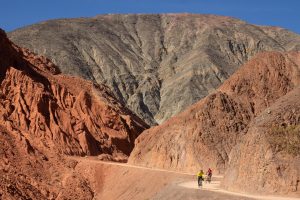
The Serranía de Hornocal, near Humahuaca, is one of Argentina’s most breathtaking natural sights. Often called the “Mountain of Fourteen Colours”, its folded layers of red, pink, ochre, green and cream rock create a spectacular striped mountain wall. The viewpoint sits high above the Quebrada de Humahuaca, giving riders a chance to experience one of the region’s most dramatic landscapes.
This area is not only beautiful but deeply historic. The Humahuaca Ravine has long been an important Andean route, linking highland communities, trade paths and cultures over many centuries. On the tour, the Hornocal visit adds a real wow-factor moment: vast skies, colourful geology and a strong sense of the ancient routes that shaped this part of Argentina.
Cachi
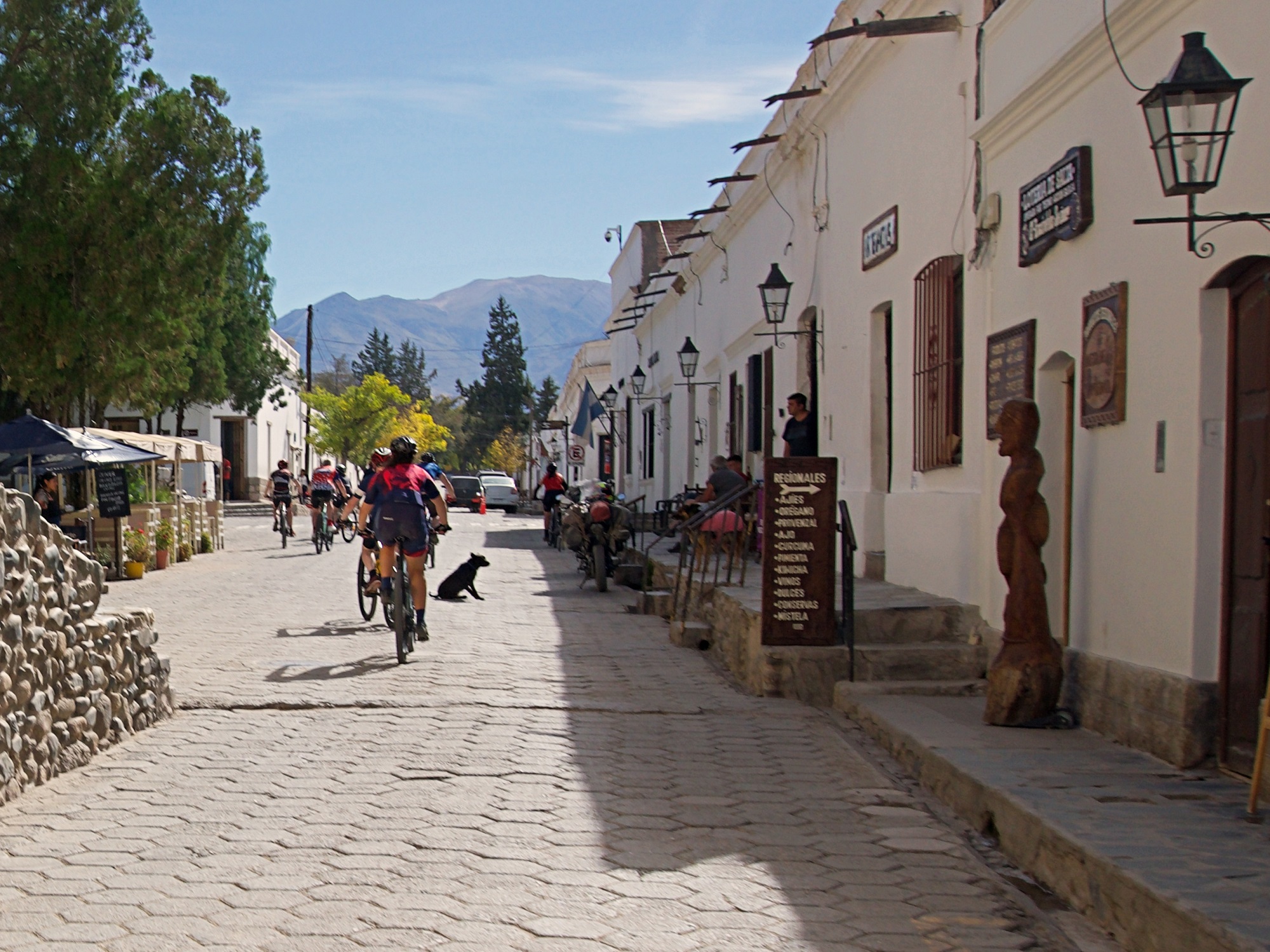
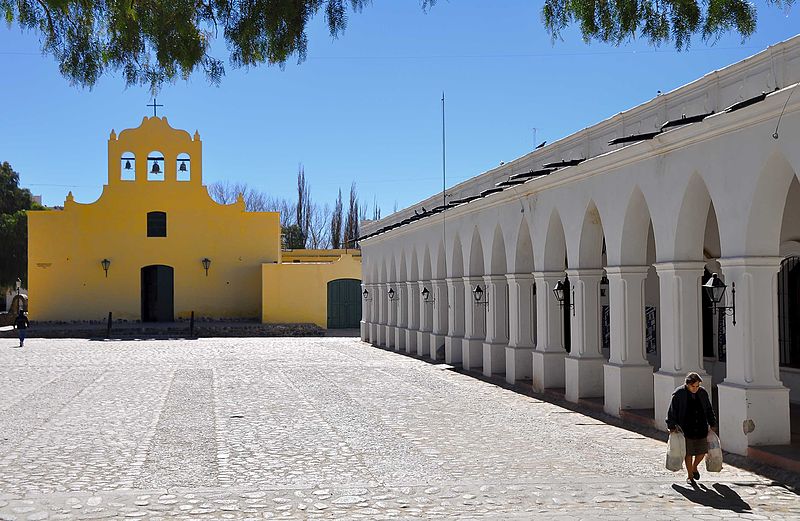
Cachi is a beautiful town at the foot of the Nevado Mountains. Snow-covered peaks provide a melt that has created the fertile green Chalchaquí Valleys. Huge fields of peppers are cultivated here and when harvested each April are laid out to dry creating a stunning sight. Cachi is characterised by its white buildings, adobe houses and cobbled streets.
Cachi means “salt” in Quechua the town was named thus because local people mistook the snow of El Nevado as salt mine.
In the central plaza, framed by palm and orange trees, is Igleasia San Jose. The church has a cactus wood roof, aisles and lecterns. There is an Archaeological Museum in the town. Weaving is a local tradition, and handmade ponchos, wall hangings and rugs are on sale in the town’s tourist office.
Itinerary – Argentina
Day 1: Arrive Salta

Your redspokes North Argentina tour begins in Salta. On the first day of the tour you will be met at Salta International Airport and transferred to our joining hotel. At a time to be advised, we will have group introductions, a bike fitting, and a chat about the tour. The city is known as ‘the beautiful Salta’ for its colonial architecture, balmy weather and scenic natural surroundings, this evening we can enjoy a walking tour through our vibrant surroundings.
Accommodation: Hotel
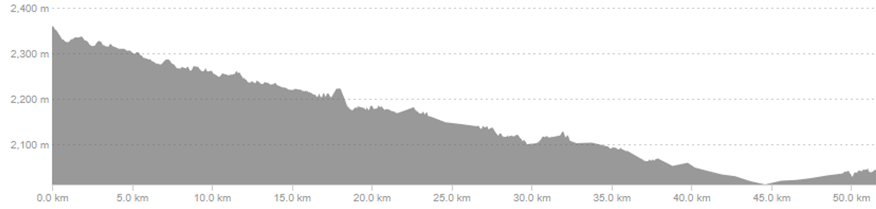
Day 3: Cachi to Seclantas
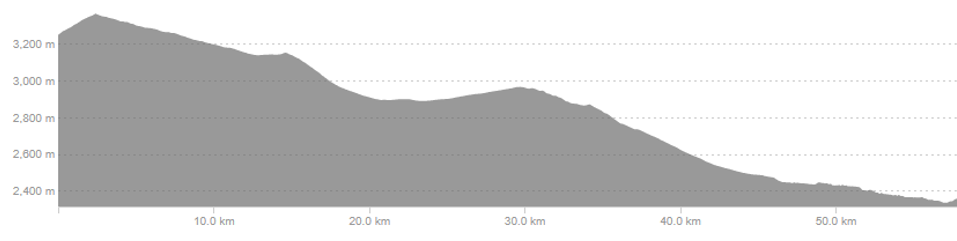
After breakfast, we’ll cycle along the legendary Ruta Nacional 40, following a section known as “La Ruta de los Artesanos” – the Artisans’ Route. Along the way, we’ll stop at El Colte, where local weavers continue to use traditional looms and techniques passed down through generations.
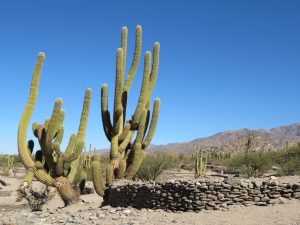
From here, we continue on a gently undulating ride towards Seclantás, descending from approximately 2,531m to 2,100m with very few steep climbs. Depending on the time available, optional activities may include a shorter walk, horse riding or a visit to the nearby Campo de Cardones Gigantes – the Giant Cardon Field.
We’ll end the day at a charming rural hotel, perfectly placed to enjoy the peaceful atmosphere of the Calchaquí Valley.
Cycle Distance: 33 km (21 mi) gravel road
Ascent: 276 m (905 ft)
Descent: 538 m (1,765 ft)
Accommodation: Hotel (B/L)
Day 4: Seclantas to Angastaco
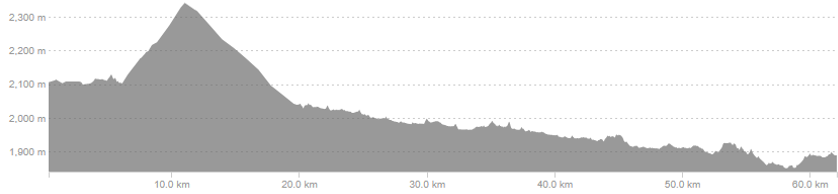
We will have an early breakfast and then begin cycling along a long road taking in the small villages and vastness of the landscape along the way. We go back on our steps for a few kms to Seclantás little village and, from there along a very picturesque road towards Angastaco. The aridity of the land
and the small villages give a vast framework to the landscape. Accommodation in the heart of the Calchaquí Valleys. Our cycling will end near Angastaco, which intriguingly translates as ‘Eagle of the Carob Tree’
Cycle Distance: 62 km (39 mi) gravel road
Ascent: 735 m (2,410 ft)
Descent: 947 m (3,110 ft)
Accommodation: Hotel (B, L)
Day 5: Angastaco – Cafayate
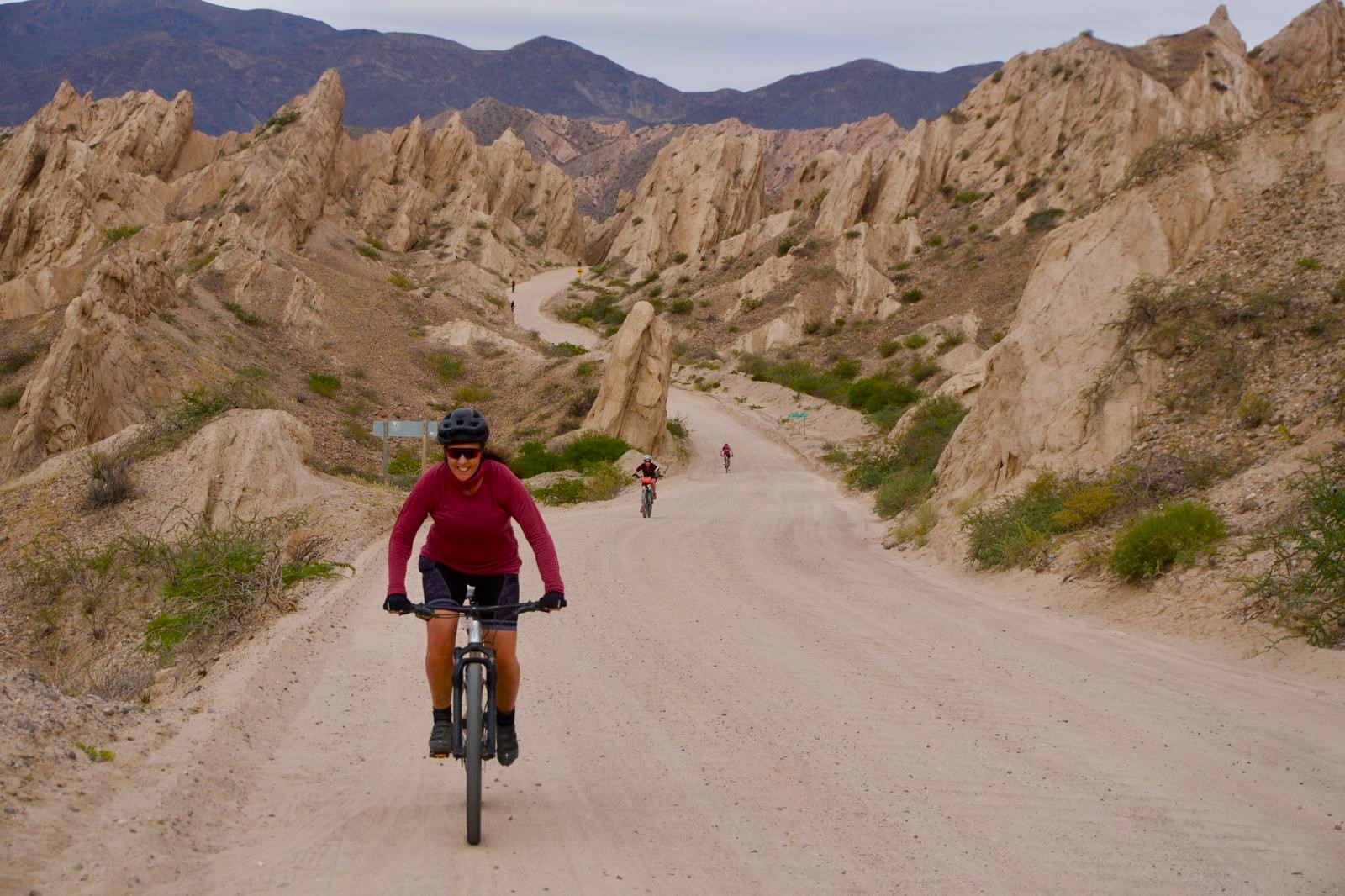
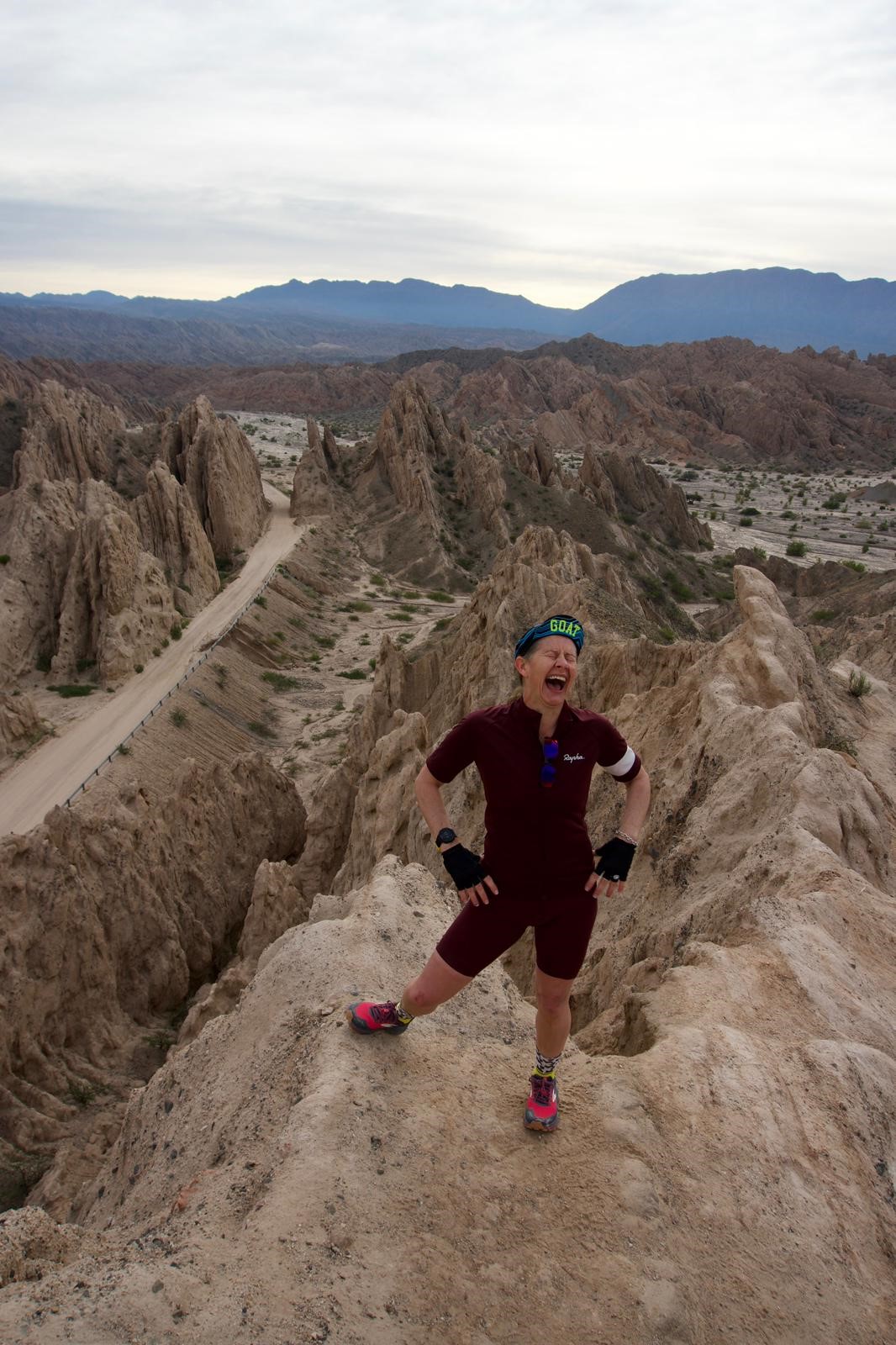
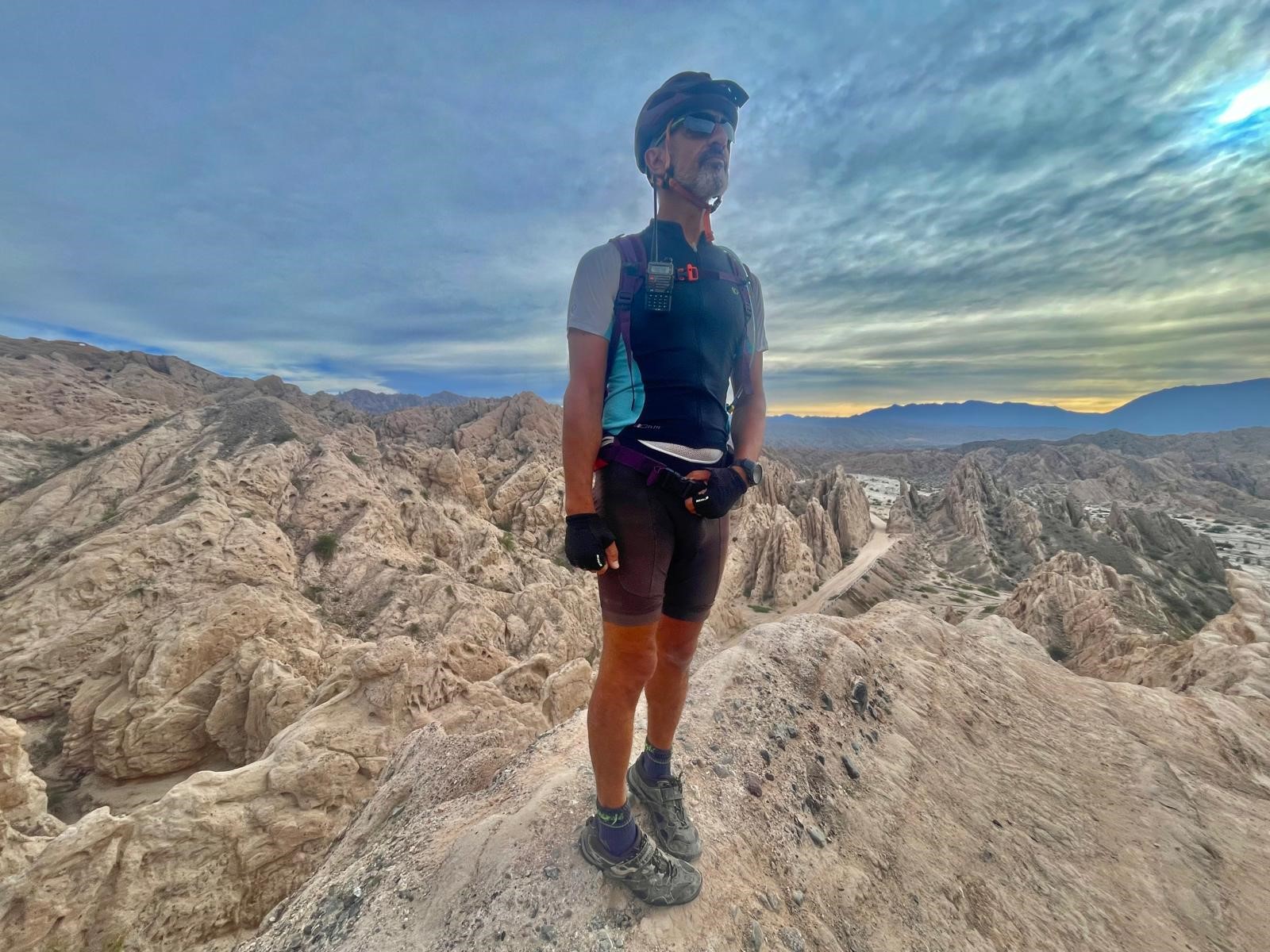
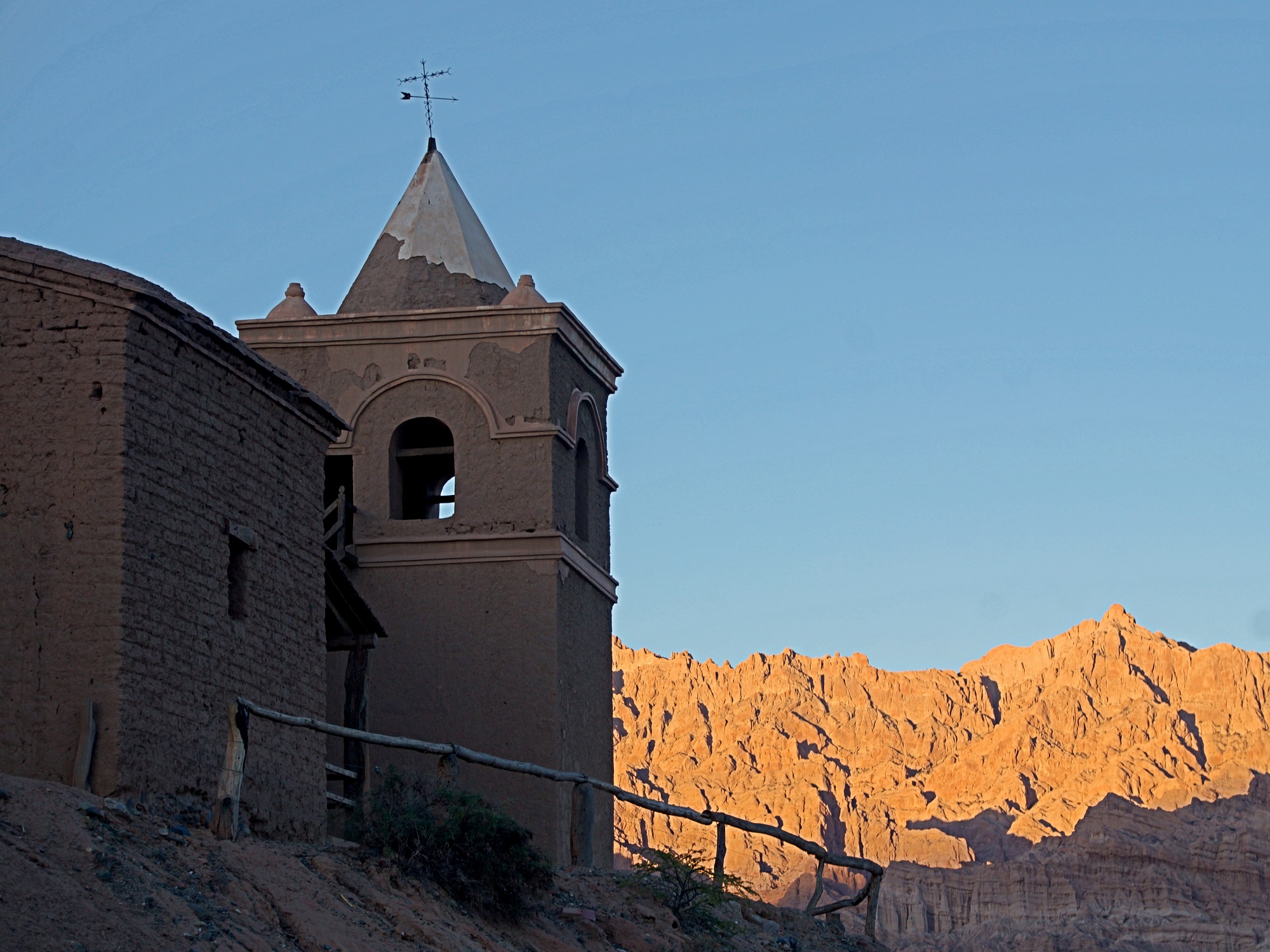
After breakfast, we start cycling, stopping at different points of interest with beautiful views of the formidable scenery of “La Quebrada de las Flechas” (The Arrows Ravine), up to the ancient Nuestra Señora de la Merced Chapel. There we will have a coffee stop and continue our cycle south of the Calchaquí Valley, visiting the small, ancient village of San Carlos (the second oldest village in Argentina and a place of Spanish resistance in the wars for independence). An undulating gravel road with a few slopes brings us to our lodging and dinner in a tranquil place.
Cycle Distance: 75 km (45 mi) — 45 km (28 mi) paved road + 30 km (19 mi) gravel road
Ascent: 492 m (1,614 ft)
Descent: 761 m (2,497 ft)
Accommodation: Hotel (B, L)

Day 6: Cafayate area: Sacred Valley of The Quilmes
Breakfast and we cycle southwards up to the Sacred City of The Quilmes (a monumental archaeological site). Guided tour, in collaboration with the indiegenous community of Quilmes, then lunch and a return by vehicle. We return to the same lodgings as the previous night.
Cycle Distance: 54 km (34 mi) — 53 km (33 mi) paved road + 1 km (0.6 mi) gravel road
Ascent: 394 m (1,290 ft)
Descent: 165 m (540 ft)
Accommodation: Hotel (B, L)

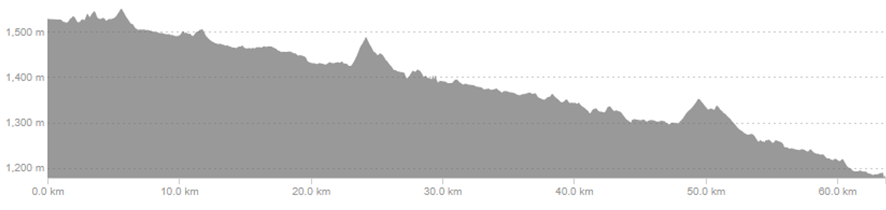
Day 7: Cafayate to Salta
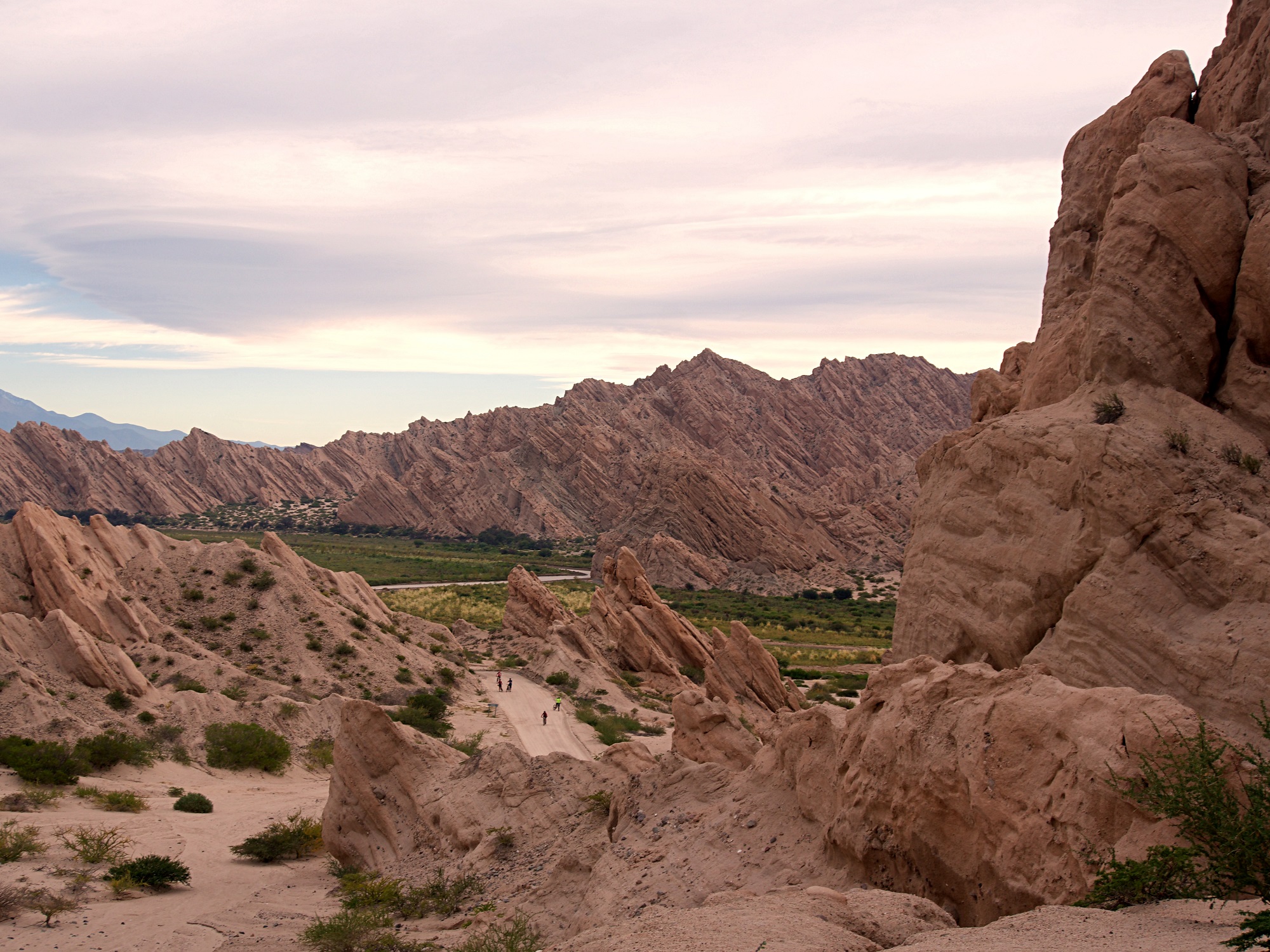
After breakfast and a short transfer, we set off on an unforgettable ride through the spectacular Las Conchas River Valley. As we cycle through this dramatic landscape, we’ll pass some of the region’s most iconic rock formations – including La Yesera, the towering natural walls of El Anfiteatro (The Amphitheatre), and the mysterious Garganta del Diablo (Devil’s Throat).
Our journey ends at the atmospheric, long-abandoned Alemania railway station – a quiet relic of the past nestled in the wilderness. From here, we transfer back to Salta and return to the comfort of the downtown hotel we enjoyed earlier in the tour.
Cycle Distance: 62 km (39 mi) paved road
Ascent: 362 m (1,190 ft)
Descent: 707 m (2,320 ft)
Accommodation: Hotel (B, L)
Day 8: Rest Day in Salta
Today we have a day off the bikes on redspokes North Argentina tour. There is plenty to enjoy in Salta, from colonial architecture to beautiful natural landscapes. Moving in a clockwise direction around the 9th July Square you will find neo-classical Cathedral Basilica de Salta, the Museum of Contemporary Art, the Cabildo (former city town hall, now a museum) and the neoclassical Museum of High Mountain Archaeology, which houses Inca artefacts including 500 year old Incan Ice children. Within walking distance of the Square is Saint Francis Church and the city’s three pedestrian streets: Alberdi, Florida and Caseros.
For those of you who enjoy hiking you can explore an old Inca Trail or we can offer an excursion to a family farm. Salta has a cable car which offers splendid views of the city or you can climb over 1000 steps up San Bernardo Hill for spectacular views of the city and the entire valley.
The three blocks in Balcarce Street to the train station are now the centre of night life in Salta, with restaurants, pubs and cafés on both sidewalks and concerts every night. You could spend the evening at a traditional Peña (folk concert). Regional music features guitars, sheepskin drums, violins, and of course local gauchos (cowboys) you can even participate, clapping along to the criolla music, a mix of Spanish and indigenous styles and a part of daily life here.
Accommodation: Hotel (B)
Day 9: Salta to Tilcara
After breakfast, we begin a scenic transfer lasting around two and a half hours up to Lozano River. Once there, we start our ride along Cañon de Jaire. Our final transfer will be towards Tilcara where we’ll experience the unique atmosphere of the Pucará de Tilcara, an extraordinary archaeological site built by the Tilcaras, the earliest known indigenous inhabitants of the region. Set at a strategic vantage point above the Humahuaca Ravine, the site offers both historical insight and stunning views that evoke a deep sense of connection to the past. In the evening, we’ll enjoy dinner and settle into a welcoming lodge surrounded by the serene beauty of the surrounding hills.
Cycle distance: 22 kms (gravel road with a significant climb: 350m in 10km)
Ascent: 456 m (1,496 ft)
Descent: 510 m (1,673 ft)
Accommodation: Hotel (B,L)

Day 10: Tilcara to Purmamarca
Today we visit one of Argentina’s most breathtaking and colourful natural wonders – the Hornocal. Be sure to have your camera ready for some spectacular photo opportunities!
After breakfast, we’ll transfer by vehicle to the charming town of Uquía where we’ll go trekking for one and a half hours. Then, a short transfer to Humahuaca village for lunch and a transfer uphill to The Hornocal. There, we’ll enjoy a wonderful downhill ride to RN9 again but this time bordering Calete River. We’ll then have a final transfer by vehicle to Purmamarca, where you can relax and take in the vibrant mountain scenery. Dinner tonight is at a local restaurant in the heart of town, and we’ll spend the night in a hotel surrounded by the region’s iconic colourful hills.
Cycle: 31 km (19.5 mi) gravel road
Ascent Cycle: 107 m (351 ft)
Descent Cycle: 1,553 m (5,095 ft)
Accommodation: Hotel (B, L)
Day 11: Purmamarca: Salt flats and the Lipan Steep
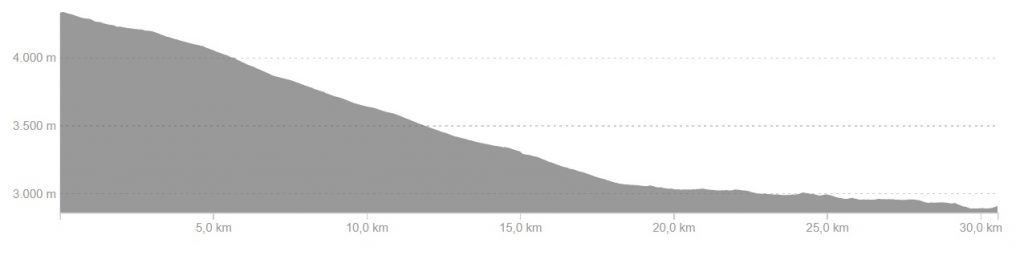
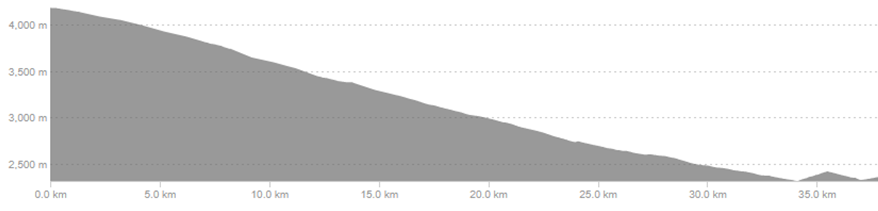
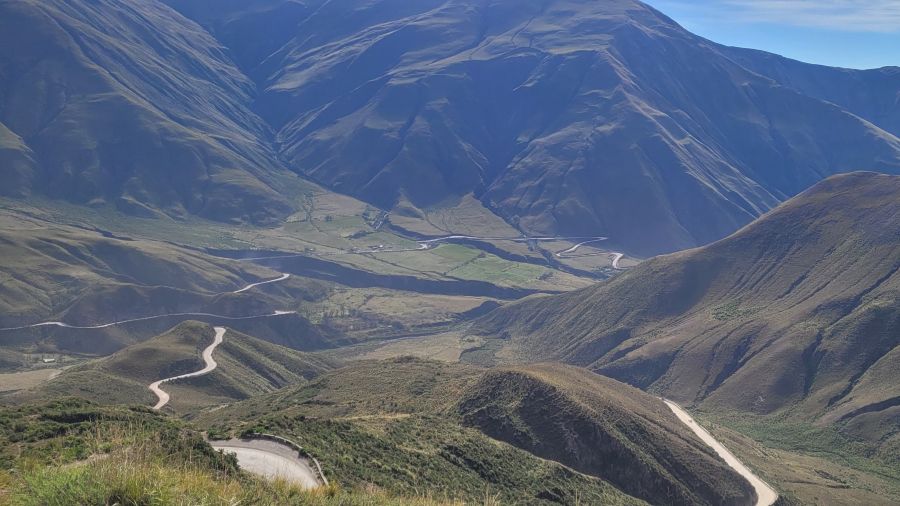
After another early breakfast we transfer to the famous Salinas Grandes (The Big Salt Plain) a 12 hectare dried out saltwater lake on the Puna. We cycle through a seemingly infinite sea of salt framed by a strikingly contrasting blue sky. We will have a picnic lunch at the heart of the salt flat, then transfer by vehicle for a while before we begin a dramatic cycle down the Lipan Steep which drops from 4200m to 2200m over 30km to reach Purmamarca. We’ll return to the same hotel as the previous night to relax and reflect on a spectacular day.
Cycle Distance: 40 km (25 mi) — 6 km (4 mi) on salt + 34 km (21 mi) paved downhill
Ascent: 16 m (50 ft)
Descent: 1,856 m (6,090 ft)
Accommodation: Hotel (B, L)
Day 12: Purmamarca to Termas de Reyes
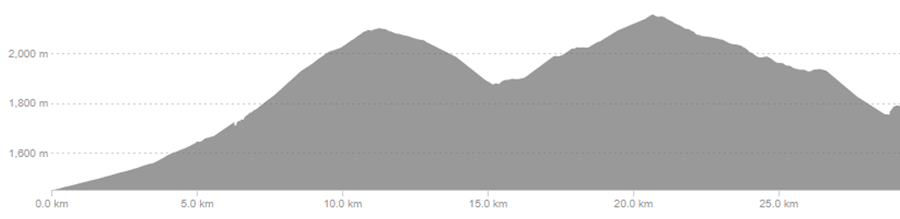
We begin this morning with a vehicle transfer to avoid busy roads. From Yala we set off on the bikes cycling to the Yala Lagoon in the Potrero de Yala Provincial reserve area. The lagoons comprise of six lakes which are a habitat to many species of bird and other wildlife. We ride on to Termas de Reyes hot springs. They are known as ‘Springs of Kings’ because indigenous chiefs travelled here to bathe in the mineral rich waters which were believed to have magical properties.
Cycle Distance: 30 km (19 mi) — 25 km (16 mi) gravel road + 5 km (3 mi) paved road
Ascent: 1,012 m (3,320 ft)
Descent: 683 m (2,240 ft)
Accommodation: Hotel (B, L)
Day 13: Termas de Reyes to Salta
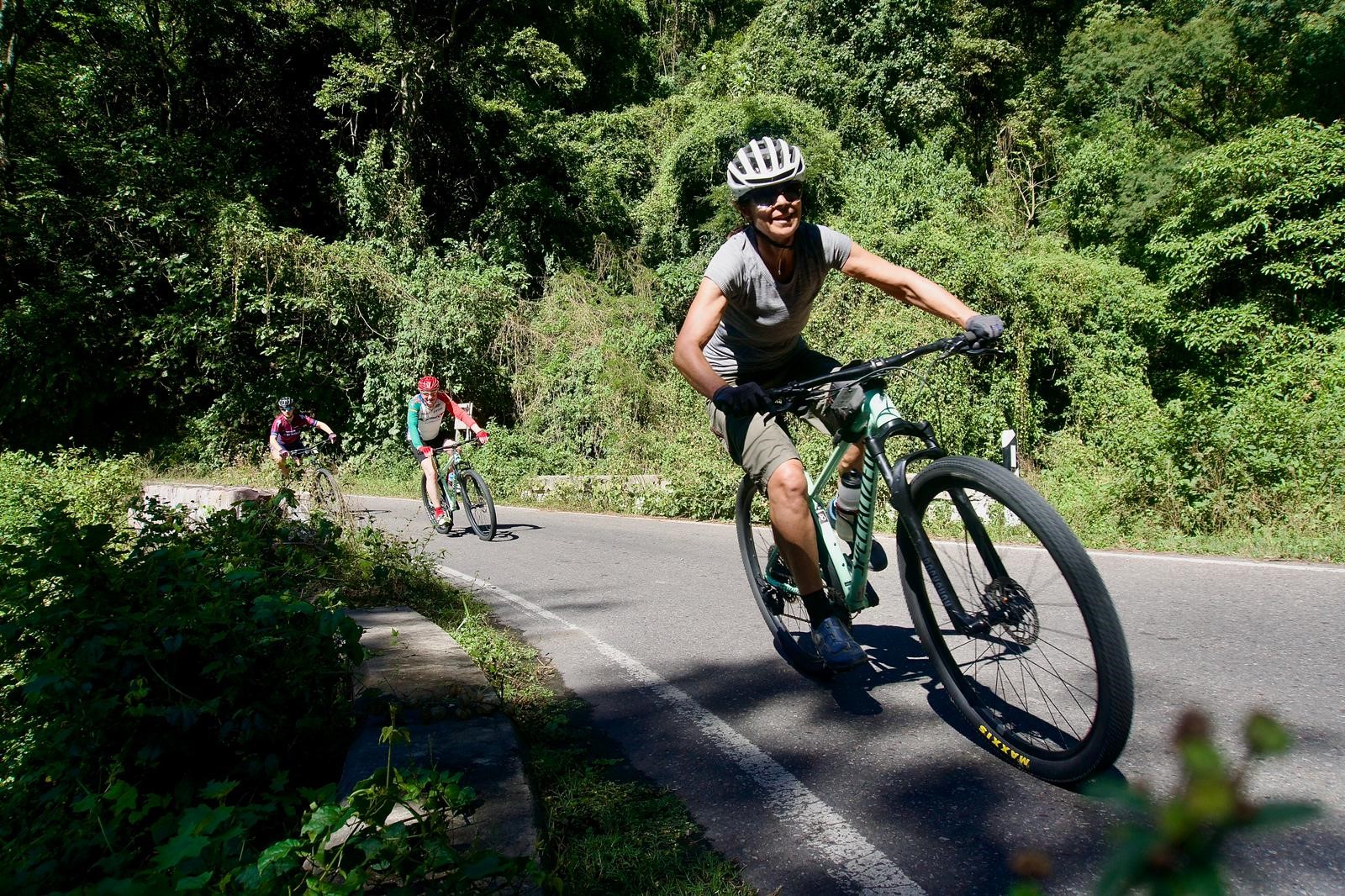
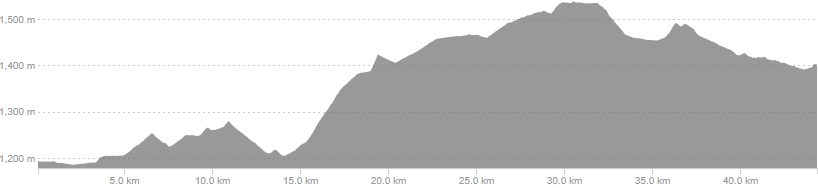
Today’s adventure returns us to Salta via one of the region’s most exciting cycling routes – a narrow cornice path winding through dense jungle. We begin with a transfer to the small village of El Carmen, close to the start of El Camino de la Cornisa (The Edge Route) – a paved, single-track road less than four metres wide that threads its way through the lush rainforest. We’ll follow this winding trail southward, enjoying dramatic views and the thrill of riding through such unique terrain. We’ll stop for a picnic lunch or enjoy a meal at a local restaurant near the village of La Caldera, before transferring by vehicle to Salta. Tonight’s accommodation is once again at our familiar downtown Salta hotel. We will celebrate the end of the tour and our achievements with a farewell dinner together.
Cycle Distance: 45 km (28 mi) paved road
Ascent: 564 m (1,850 ft)
Descent: 355 m (1,165 ft)
Accommodation: Hotel (B, L, D)
Day 14: End of our tour of North Argentina
After breakfast, we’ll transfer you to Salta Airport for your flight home. As we say goodbye to the vibrant landscapes and rich culture of northwest Argentina, we hope you leave with lasting memories, new friendships, and a deep appreciation for this remarkable corner of the world.
Note: distances in kilometers for cycling are approximate and are not mandatory as there will be a support vehicle with you at all times.


Essential Info – Argentina
Tour Status & Booking Conditions
Each tour requires a minimum number of participants to run
Tour status updates automatically as bookings are received
Do not book flights until the tour status is marked Guaranteed
Tour Status Definitions
- Guaranteed – Tour is confirmed and open for booking
- Guaranteed – Limited – Confirmed, with limited spaces remaining
- Available – 2 More to Guarantee – Needs two more bookings to confirm
- Available – Open for booking but not yet confirmed
- Contact – Please get in touch to discuss availability
- Fully Booked – No places remaining
Booking & Payments
- A £350 deposit confirms your place on the tour
- Deposits are refundable until the tour becomes Guaranteed
- Final balance is due 56 days before the tour start date
- By booking, you agree to our booking conditions (please read in full)
Small Group Note
For groups of fewer than four participants, the guide may lead from the support vehicle rather than cycling with the group, ensuring full logistical and guiding support.
What’s included
Fully supported cycling holiday
- Support vehicle for luggage transport and rider assistance
- Accommodation throughout the tour (twin share unless stated)
- Most meals (see itinerary using the BLD key below)
- Snacks and mineral water on cycling days
- Airport transfers on the first and last day of the tour
- English-speaking local guide(s)
- Mechanical assistance for minor bike repairs
Meal Key (used in the itinerary)
- B = Breakfast
- L = Lunch
- D = Dinner
- Example: B, L means breakfast and lunch are included that day.
- Special dietary requirements can usually be catered for with advance notice. Please advise us at the time of booking.
What’s not included
- International flights
- Travel insurance (mandatory)
- Visa fees (if applicable)
- Alcoholic drinks
- Meals not specified in the itinerary
- Tips for guides and support staff
- Bike hire
- Cycle helmet
- Single room supplements
Getting there and away
Tour Start
- Start location: Salta
- Airport transfers provided on the tour start date, regardless of arrival time
- Early arrivals may need to wait for hotel check-in (subject to availability)
Tour End
- End location: Salta
- Airport transfers provided if departing on the final tour day
- Extra nights and transfers can be arranged at additional cost
Flights
- International flights are not included
- We are happy to advise on suitable arrival and departure airports
Accommodation
We select accommodation based on comfort and character, rather than luxury. Expect clean, friendly lodgings that give you a genuine feel for the region.
- Twin-share rooms are standard and included in your tour price.
- If you’re travelling solo, we’ll pair you with another traveller of the same gender.
- Should you wish to have a room to yourself there is a single supplement option on most of our tours.
Eating & Drinking (Special diets)
Most meals are included in your trip price, with the exception of non-cycling days and a few specific exclusions. Please refer to your detailed itinerary for full information on what’s covered.
- All breakfasts and lunches are provided during the tour.
- Meals are plentiful, nutritious, and designed to keep you energized throughout the day.
- You’ll enjoy a variety of local cuisine along with some familiar Western dishes.
Taste of Argentina
On the Argentina tour, you’ll have the opportunity to experience the country’s rich and diverse culinary heritage, especially in the northwest region. Expect flavours influenced by Andean, Spanish, and indigenous traditions, including:
- Asado (Argentine barbecue) – A cultural staple, featuring expertly grilled meats like beef, chorizo, and morcilla (blood sausage).
- Humita and Tamales – Corn-based dishes wrapped in husks and filled with cheese, meat, or vegetables.
- Empanadas Salteñas – A regional favourite from Salta; these are baked or fried pastries filled with spiced beef, potatoes, egg, and sometimes olives.
- Locro – A hearty stew made with corn, beans, potato, and meat, often served during festivals or cooler months.
- Argentine Wine – Especially from nearby Cafayate, known for its Torrontés white wine and bold reds like Malbec and Cabernet.
Dietary Requirements
- If you have any special dietary requests, please let us know at the time of booking.
- Vegetarian, vegan, gluten-free, and other diets can be accommodated.
- Advance notice is essential to ensure we can meet your needs.
Cycling Support
Support Vehicle
- A support vehicle accompanies the group throughout the tour
- Transports main luggage between overnight stops
- Available for rest breaks or if you need a lift
- Typically stops every 20 km / 12 miles
On-Ride Support
- Guides carry tools for minor repairs
- You only need a small daypack while riding
Helmet Policy
- Helmets are mandatory while cycling
- For this tour you can hire helmets locally.
Bike Hire
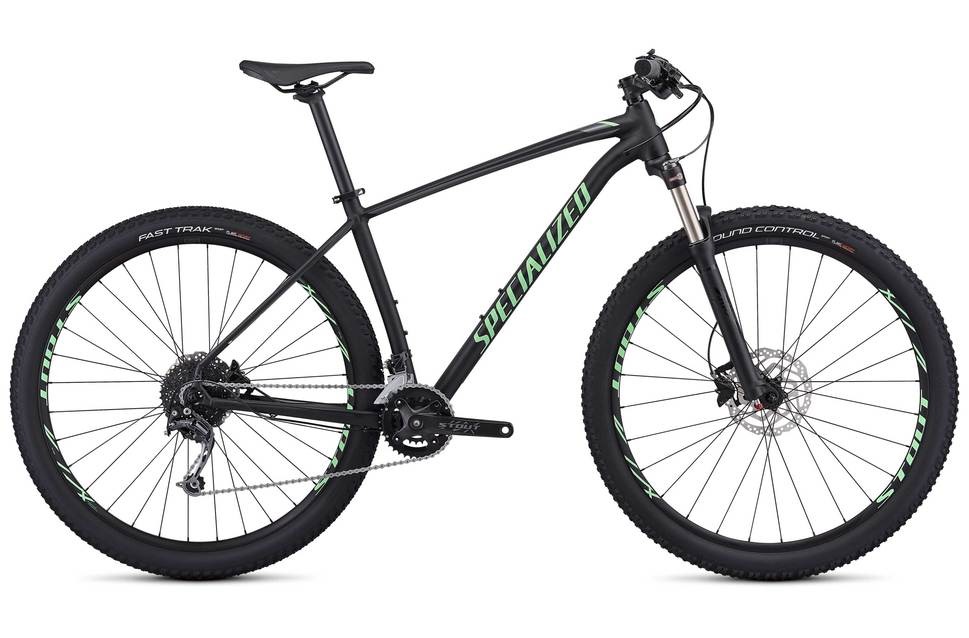
For this tour we have new Specialized Rockhopper Elite, Specialized Rockhopper Sport and Specialized turbo Ebikes, VADO 3.0. and 4.0. They all are well maintained bikes with Shimano components and suspension forks.
What’s Included with Bike Hire
- Standard flat pedals
- Basic spares and mechanical support
Customising Your Bike
- You may bring your own pedals (SPD / clip-in)
- You may bring your own saddle if preferred
- Our guide will help fit pedals and saddles on arrival
If you are able to do a simple repair yourself then you can if you wish take a small repair kit with you as this will avoid the need to wait for assistance should the team or support vehicle be any distance away. The bikes will come with one water bottle cage fitted.
Please be aware that the hire bikes have the front brake on the right side and the back brake on the left side (as is usual in the UK).
Can I bring my own bike?
Recommended Bike Setup
For this North Argentina tour, we recommend using a mountain bike for maximum comfort and performance:
- Gearing: A low gear ratio is essential to handle steep climbs.
- Front suspension helps with potholes and rough gravel roads.
- Full-suspension is acceptable but can be tiring on paved sections.
- Handlebars: Flat bars with bar ends are great for additional hand positions on climbs.
Touring bikes: Possible, but must have:
- Strong wheels
- Wide tyres (minimum 37mm)
- Low gearing
- Recommended wheels: 36-spoke hand-built with quality rims like Sun Rhyno, Mavic, or Rigida.
Tyres
- The terrain includes washboard tarmac and rough gravel tracks.
- The best tyre choice is: Schwalbe Marathon XR – Durable, with solid tread for gravel and smooth enough for tarmac.
What to Bring for Your Bike
We recommend a full pre-trip service at a professional bike shop. Check:
- Wheel spokes
- All bearings (greased)
- Gear and brake cables
- Chain condition
- Quick-release clamps
- Tyres and rims (not worn)
- New inner tubes
- Pack these essentials:
- Multi-tool
- Tyre levers
- Pump
- Spare inner tubes
- Spare spokes
- Disc/brake pads
- Chain links
- Bike-specific spares (e.g. fluid, bleed kit)
Transporting Your Bike
- Your bike must fit within your airline luggage allowance.
- A boxed bike usually weighs 15–20kg.
- Excess baggage fees may apply.
- Hard case or cardboard box: Sent directly to the tour end-point. Your guide will help arrange this.
- Flexible bike bag: Can be stored and carried with the group throughout the tour.
Money, Currency and Tipping
The official currency is the Argentine Peso (ARS). We recommend having a supply of Argentine Pesos with you throughout the tour, particularly when travelling through smaller towns and rural areas.
- What to Bring: We recommend obtaining Argentine Pesos on arrival in Argentina. For UK travellers, there is little advantage in changing Pounds into US Dollars and then exchanging Dollars into Pesos.
- Cash: Cash is important on this tour. While cards are accepted in many hotels, restaurants and larger establishments, some smaller businesses and rural establishments may only accept Argentine Pesos.
- Where to Exchange: Currency can be exchanged at banks and official exchange offices (casas de cambio). Argentine Pesos can also be obtained on arrival at the airport. We recommend avoiding unofficial street money changers.
- ATM Access: ATMs are available in larger cities and towns and dispense Argentine Pesos. Withdrawal limits and charges can vary, and some machines may have limited cash available, so we recommend not relying entirely on ATMs.
- Credit/Debit Cards: Major credit and debit cards are widely accepted in larger towns and cities, but card facilities cannot be relied upon everywhere along the route. Always carry some Argentine Pesos as a backup.
- Spending Money: The amount you need will depend on your personal spending on meals not included, drinks, souvenirs and other extras. We estimate that around £400 should be more than enough to cover personal expenses during the 14-day tour.
- Carry some small denomination Peso notes for drinks, snacks, tips and purchases in local shops and markets.
- Check your bank’s overseas transaction and cash withdrawal charges before travelling.
Staff Tipping
Tipping is a common way to show appreciation for your local guides and support crew. While not mandatory, it is greatly appreciated when service exceeds expectations.
At redspokes, we make it clear to our teams that tips are not an obligation, but a bonus based on performance. If you feel your guide and support crew provided excellent service, a tip at the end of the tour is a meaningful gesture.
We recommend tipping as a group, with the total collected and handed to your guide, who will distribute it fairly among the team.
Suggested Amount
£60–£80 per customer
$80–$100 equivalent
Extra Costs & Optional Upgrades
- Bike hire or e-bike hire
- Single room supplement
- Extra nights before or after the tour
- Extra airport transfers before or after the tour
- Optional excursions or rest-day activities
Solo Travellers
- Solo travellers are very welcome
- Prices are based on twin-share accommodation
- We will pair solo travellers with someone of the same gender where possible
- Single rooms are usually available for an additional charge
Passport, Visa and Entry Requirements
- A valid passport is required
- Passport must usually be valid for at least 6 months after return
- Visa requirements vary by nationality and can change
- You are responsible for checking current entry requirements
- Government travel advice websites are the most reliable source
Health, Insurance & Vaccinations
Travel Insurance
Mandatory for all participants and must cover:
- Medical expenses and emergency evacuation
- Cycling and adventure activities
- Loss or damage to luggage and hired equipment
- Trip cancellation or curtailment
- Insurance should be taken out at the time of booking.
Health & Vaccinations
- Consult your GP or travel clinic at least 8 weeks before departure
- Follow advice from official travel health authorities
Climate
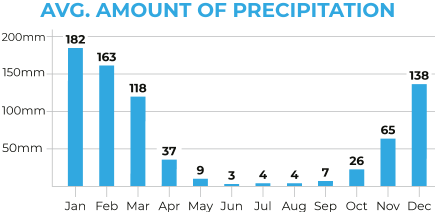
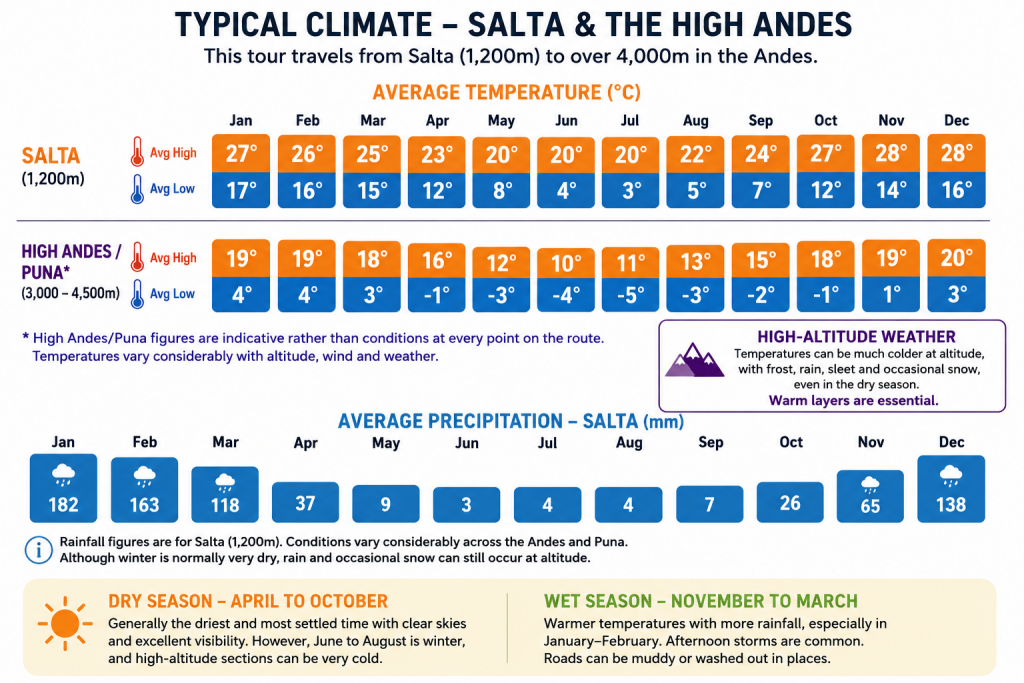
Northern Argentina has a remarkably varied climate. This tour travels from the warmer valleys around Salta, at approximately 1,200m, into the high-altitude landscapes of the Andes and Puna, reaching elevations of over 4,000m.
Weather conditions can therefore vary considerably during the tour, and temperatures in Salta should not be taken as an indication of the conditions you may experience at altitude.
April to October – Dry Season
April to October is generally the best time to experience this tour, offering the driest and most settled conditions of the year, with clear skies, low rainfall and excellent visibility. These months provide some of the best conditions for cycling and enjoying the spectacular landscapes of Northern Argentina.
However, June to August is winter in Argentina, and the high-altitude sections of the route can be very cold.
In Salta and the lower valleys, daytime temperatures can be pleasantly mild. At 3,000–4,000m and above, however, temperatures can be considerably lower.
At altitude you should be prepared for:
- Temperatures close to or below freezing, particularly early in the morning and overnight
- Cold daytime conditions
- Strong winds and a significant wind-chill effect
- Rain, sleet and occasional snow
- Rapid changes in weather conditions
Although winter is normally very dry, unsettled weather can still occur in the high Andes.
Important – High-Altitude Weather
This tour reaches altitudes of over 4,000m.
Conditions in the high Andes can be considerably colder than those shown in weather forecasts for Salta.
Even when Salta is warm and sunny, cyclists should be prepared for cold temperatures, strong winds, rain, sleet and occasional snow at altitude.
For this reason, warm layers and cold-weather cycling clothing are essential, particularly for departures between May and September.
Equipment & Packing List
Your packing list may vary depending on personal preference and seasonal weather. This guide is a general outline to help you prepare—please tailor it to your needs. This tour runs in May, August and September, which means you’ll encounter mild to cool temperatures, especially in the highlands. Be prepared for cold mornings and evenings, with daytime temperatures ranging from 10–20°C (50–68°F) depending on the altitude.
Essential Cycling Gear
- Cycle Helmet (mandatory and to be worn at all times when cycling)
- Sunglasses
- Water bottles or Camelbak (hydration system)
- Fingerless cycling gloves
- Padded cycling shorts
- Waterproof/Windproof cycling jacket (breathable material)
- Buff or neck gaiter
Clothing
This is a flexible guide, but because this tour reaches high altitude, warm and weatherproof clothing is essential.
We strongly recommend using a layering system so that you can easily adjust to changing temperatures throughout the day.
Layering Essentials:
- Thermal or base-layer tops
- Warm fleece jacket or pullover
- Down or insulated jacket
- Essential for cold conditions at altitude and useful during both the day and evening.
- Lightweight and heavyweight/warm socks
- Warm fleece or wool hat
- Warm full-finger gloves
Cold & Wet Weather Cycling
For the high-altitude sections of the tour we strongly recommend:
- Waterproof and windproof cycling jacket
- Cycling tights or thermal leg warmers
- Long-sleeved cycling jersey or warm mid-layer
- Full-finger insulated cycling gloves
- Warm cycling socks
General Outdoor Clothing
- Trekking shorts
- Lightweight trousers
- Lightweight, quick-drying T-shirts
- Long-sleeved shirts
- Swimming costume – Optional, for hotel pools or natural springs.
Please Remember
Weather in Northern Argentina can change quickly, particularly at altitude.
You may experience warm sunshine, strong wind, rain and near-freezing temperatures during the same trip, so bringing a good range of layers will make your cycling much more comfortable.
Personal Medical Kit (Recommended)
Our guides carry first aid supplies, but we advise bringing your own compact first aid kit which should include:
- Paracetamol / Ibuprofen (or whatever you prefer)
- Anti-diarrhoeal (eg. Imodium)
- Rehydration Salts (eg. Dioralyte)
- Antiseptic Cream / Wipes
- Throat Lozenges
- Plasters (Band-Aids)
- Nasal Spray & Eye Drops
- Earplugs
- Hand Sanitiser / Anti-bacterial Gel
- Insect repellent (important in rural areas)
Energy & Electronics
- Energy bars, gels, or snacks
- Electrolyte/Recovery drink powders
- Camera
- Universal travel adapter plug (Argentina uses Type C and Type I plugs – 220V)
Mobile Phones & SIM Cards in Argentina
- Bringing a mobile phone? Here’s what you need to know:
- Unlocked phone required to use local SIM cards.
- SIM cards can be purchased easily at airports, kiosks, or mobile shops – popular providers: Claro, Movistar, and Personal (approx. $2–$5 USD)
- Coverage is good in cities and towns, but patchy or unavailable in remote rural areas or national parks.
- eSIM is also available from some providers (check compatibility before travel).
- Tip: Bring a portable power bank to stay charged during long cycling days.
Electricity Supply – Plug and socket types
Argentina’s electricity: Plug types C (two round pins) and I (three flat pins) – 220V, 50HzV, 50Hz
Country Profile
Argentine Republic – Capital: Buenos Aires
- Population 44 million
- Area 2.8m sq km (1.1m sq miles)
- Major language Spanish
- Major religion Christianity
- Life expectancy 73 years (men), 80 years (women)
- Currency Peso
Accommodation – Argentina
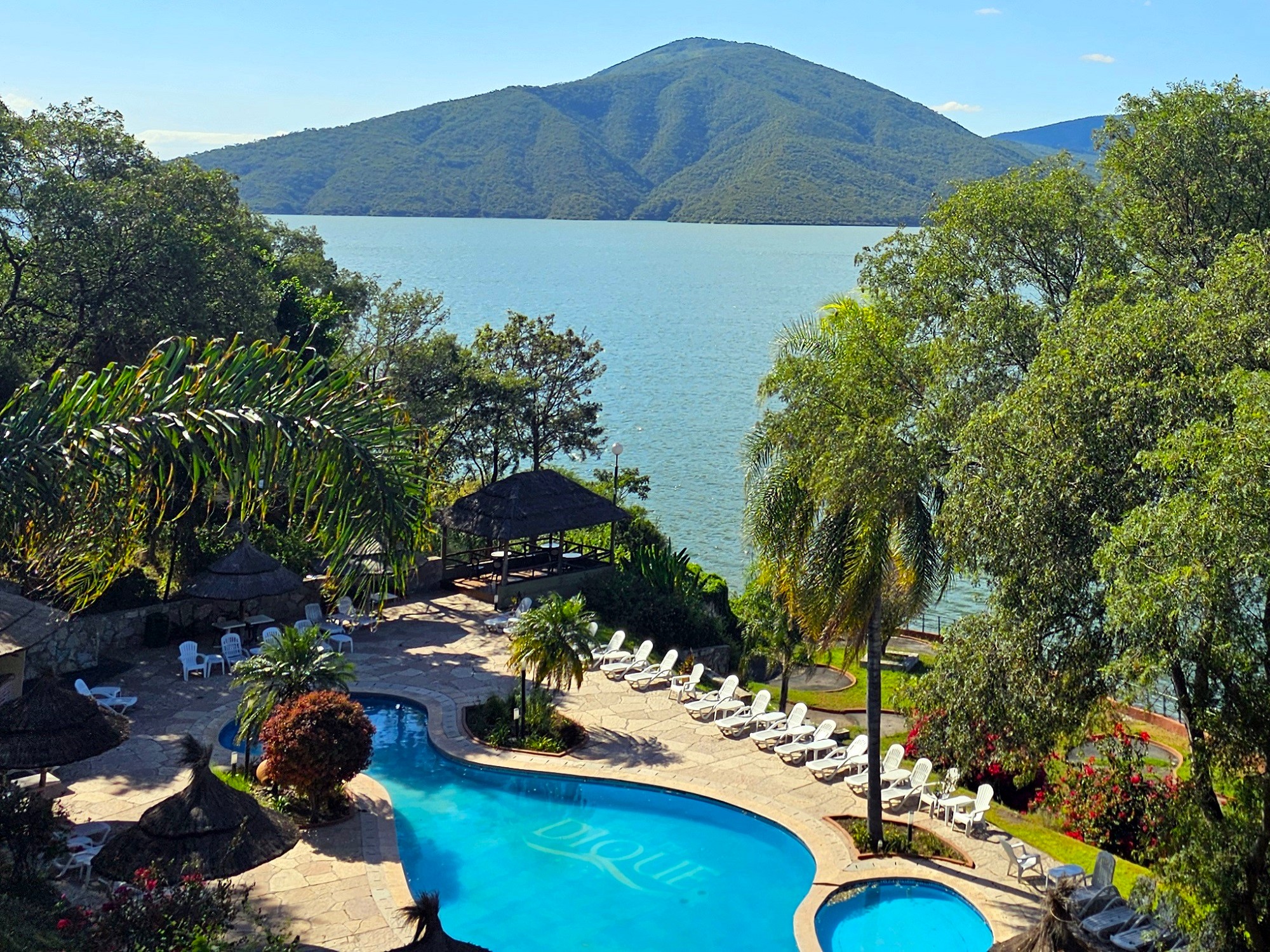
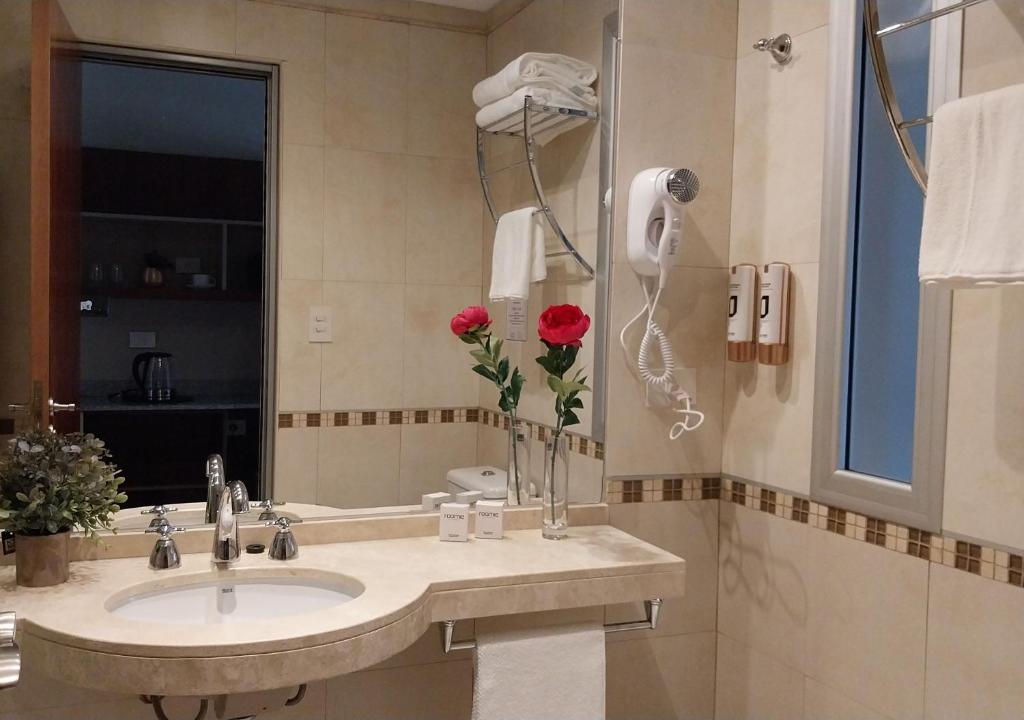
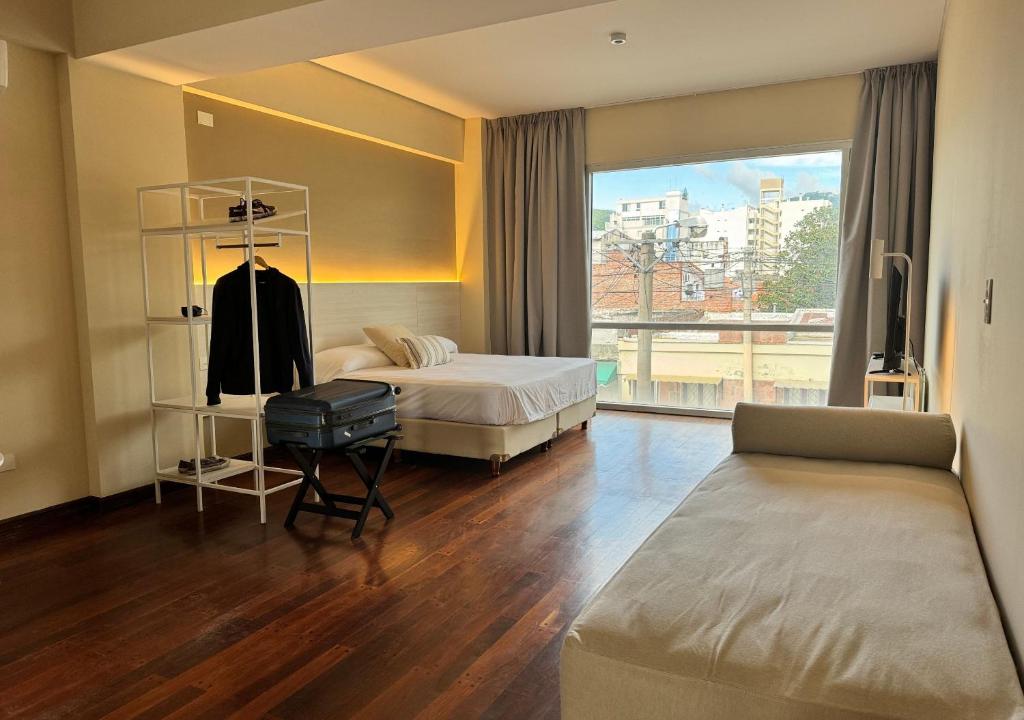
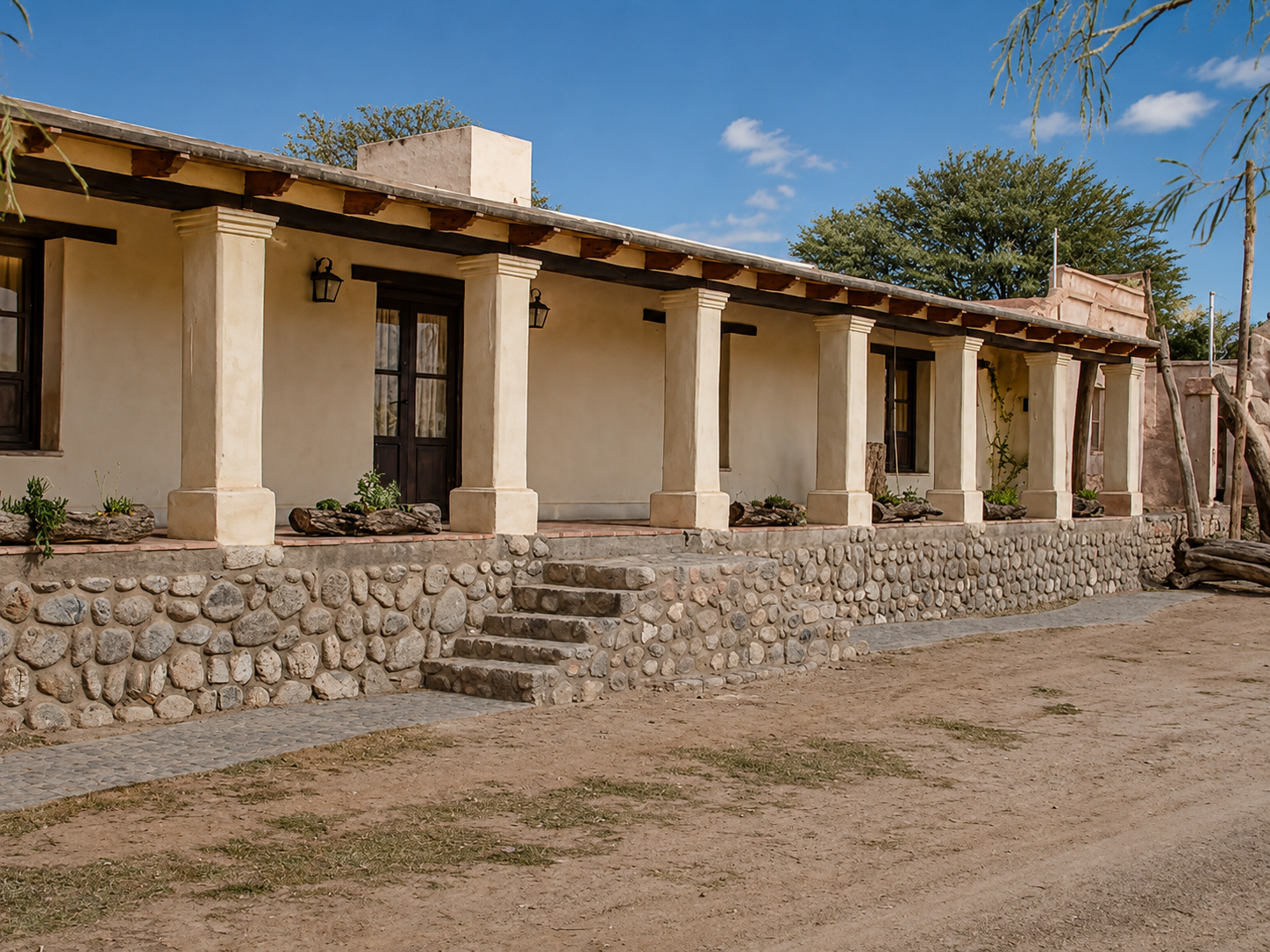
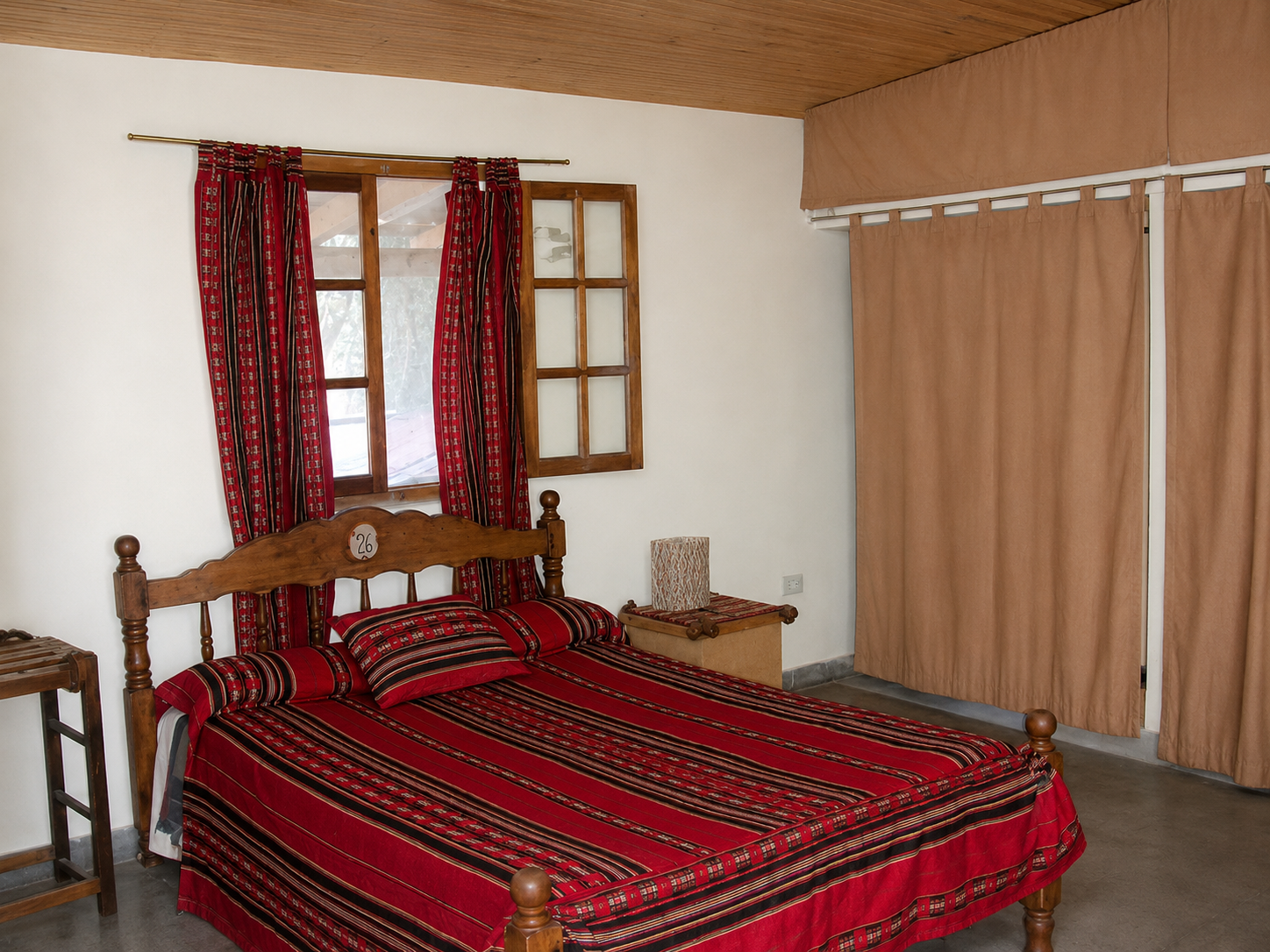
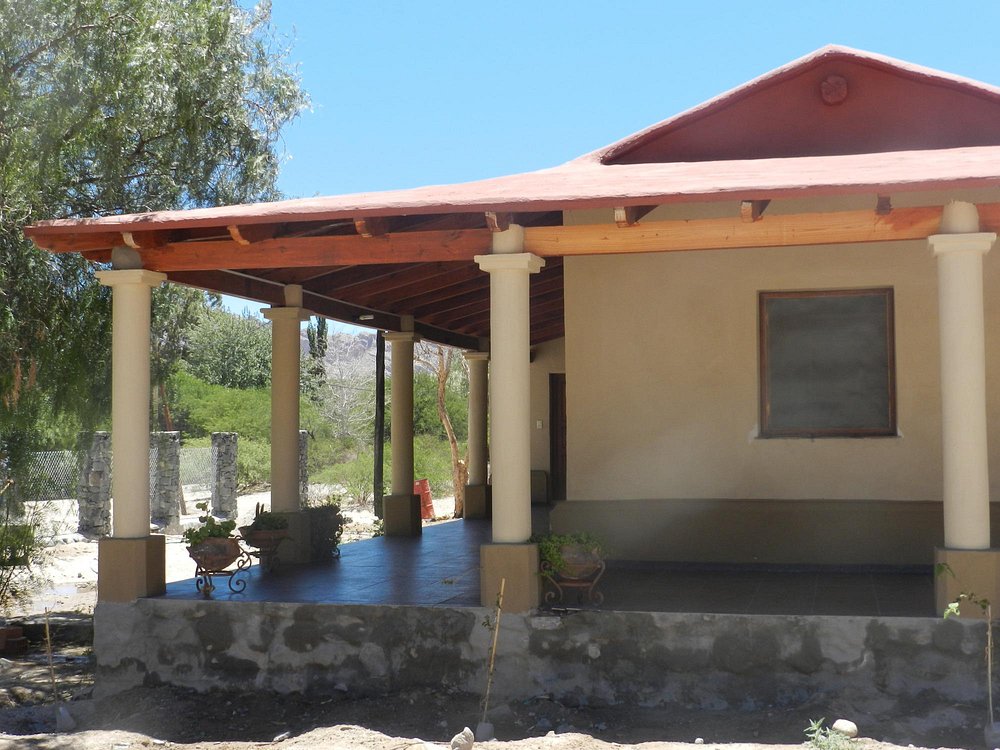
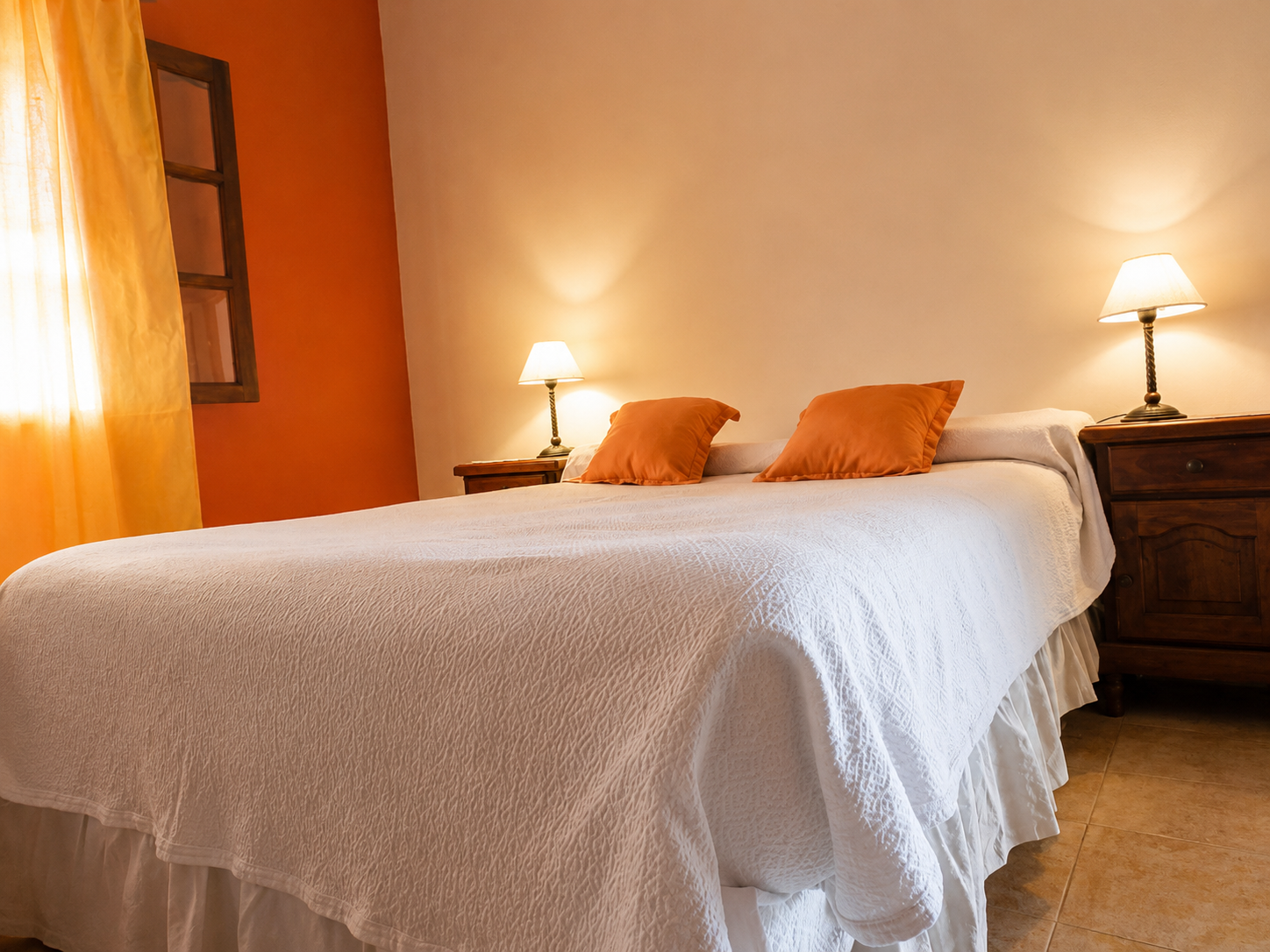
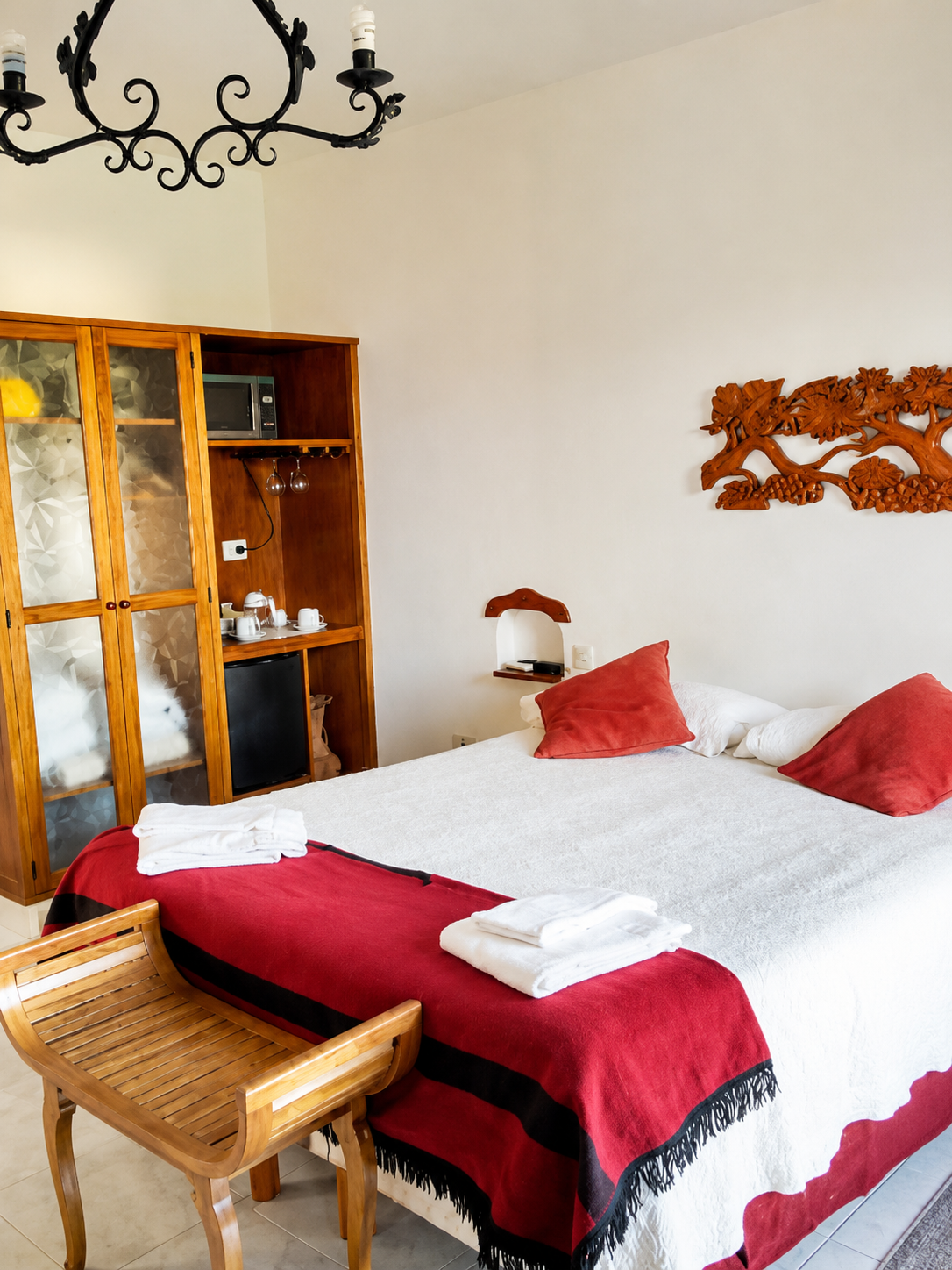
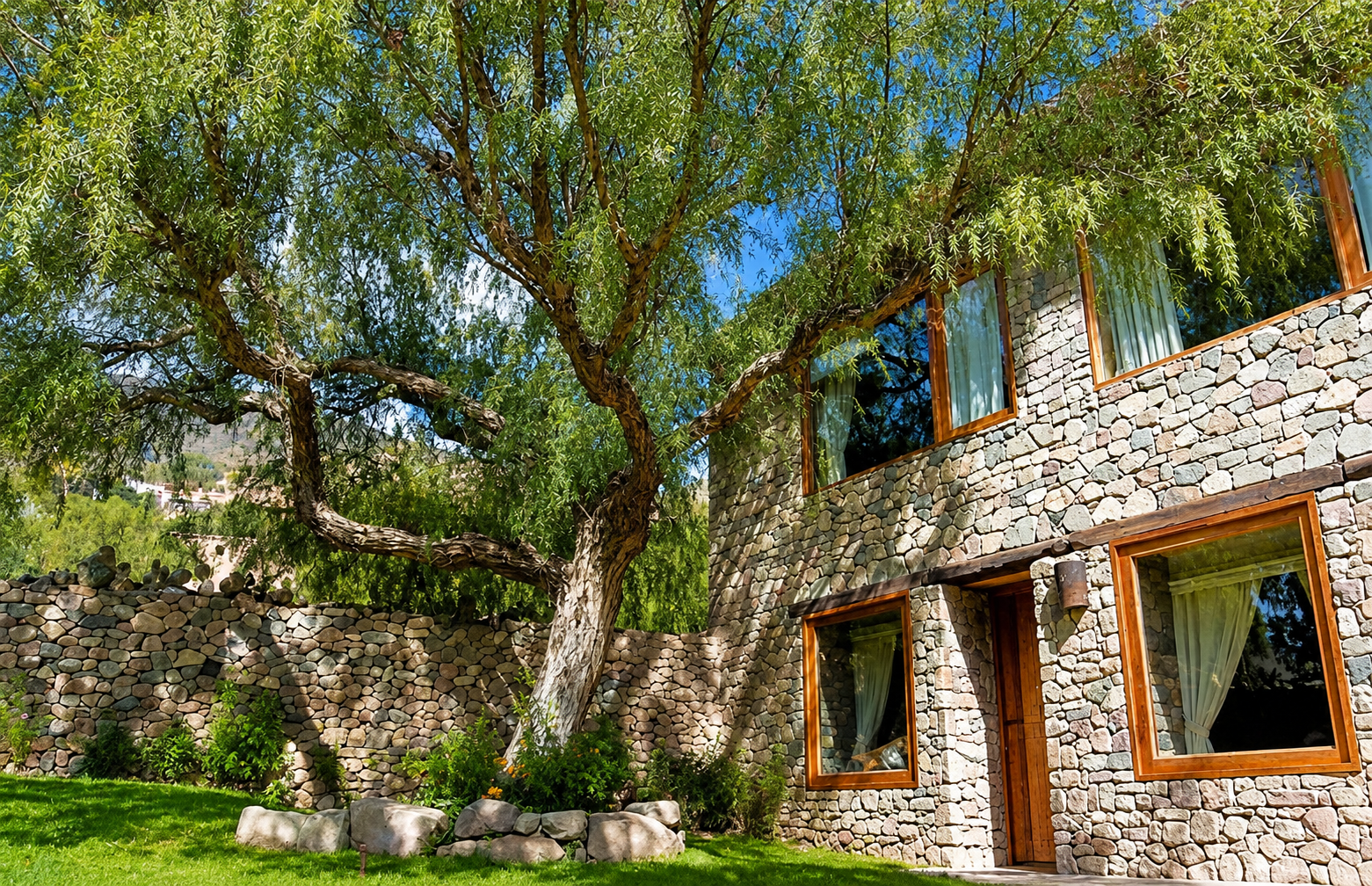
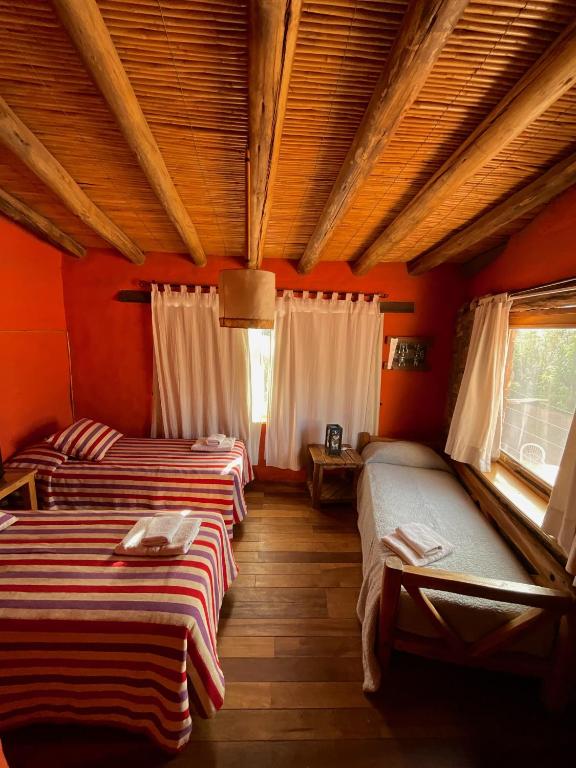
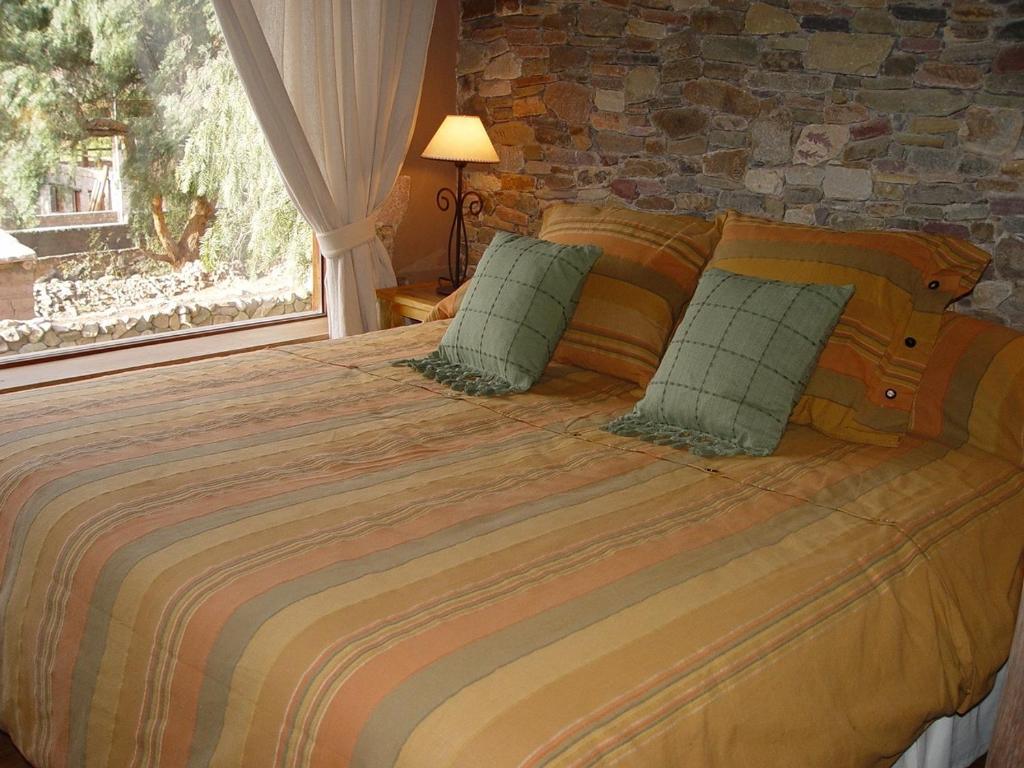
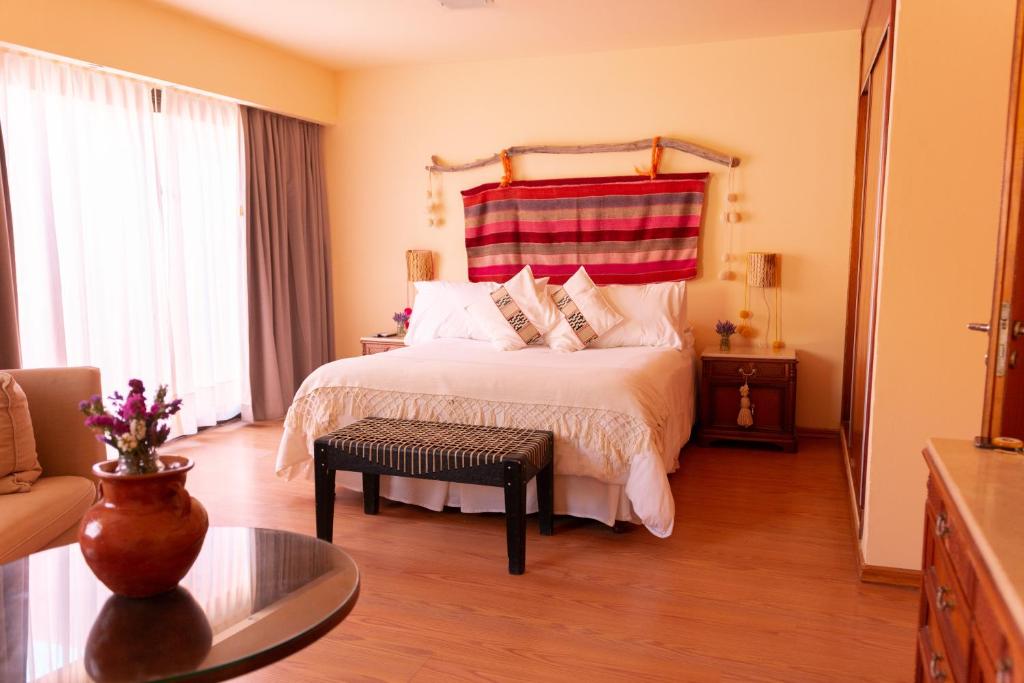
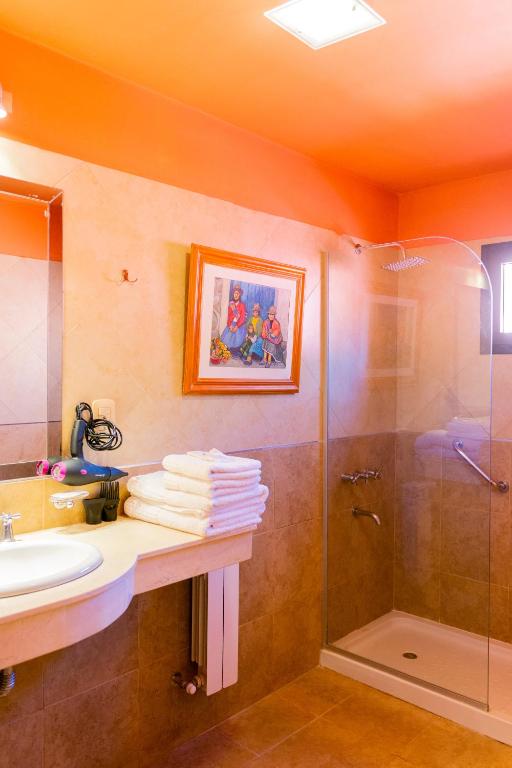
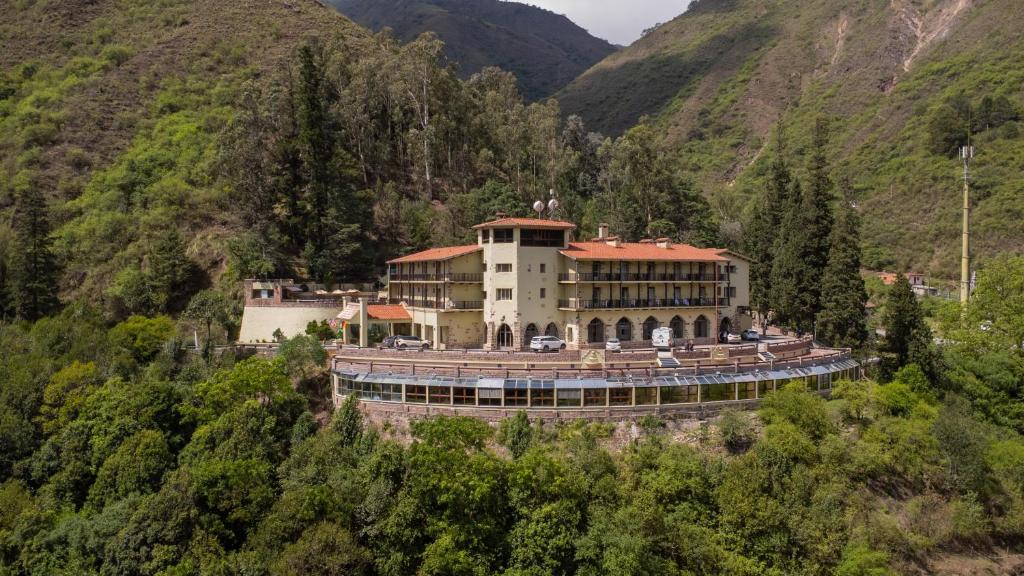
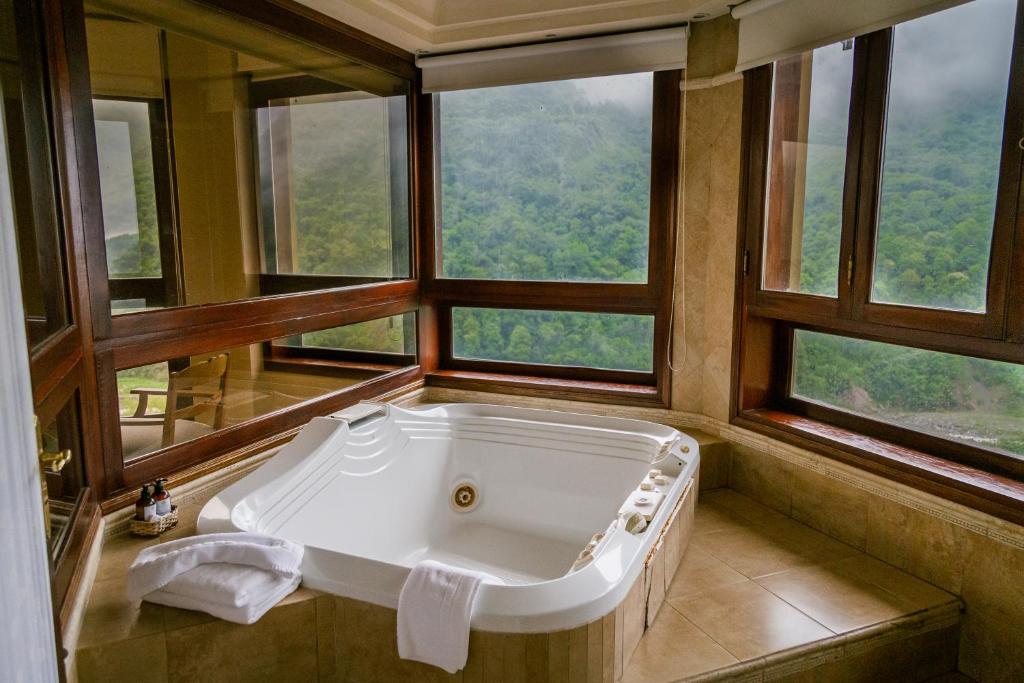
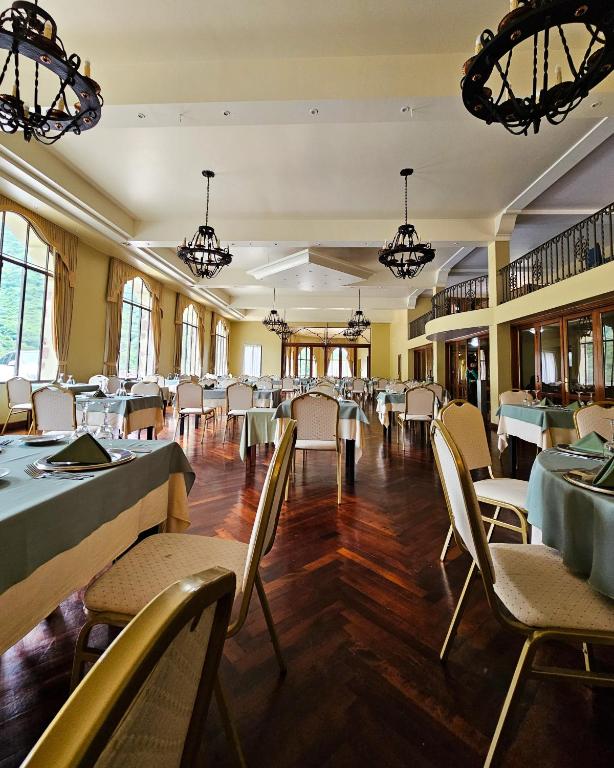
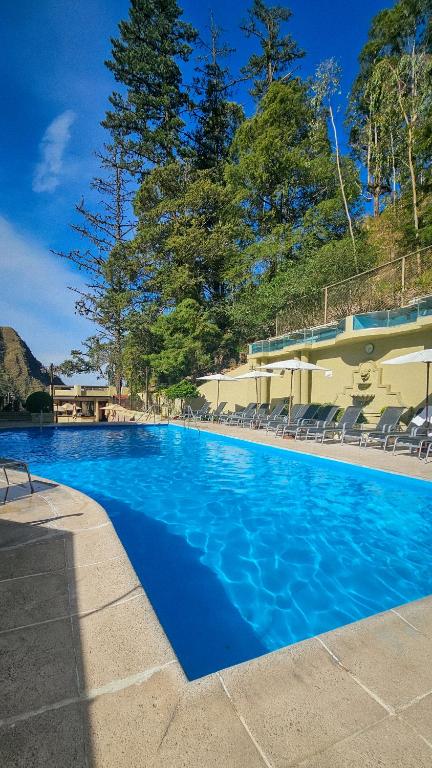
The Northwest Argentina tour offers a high standard of accommodation, chosen to complement the spectacular landscapes and culture of the Calchaquí and Humahuaca Valleys. We generally stay in stylish boutique hotels, characterful heritage properties and welcoming rural lodges, from historic Andean towns to peaceful retreats surrounded by dramatic mountain scenery.
Throughout the journey, accommodation is selected for its combination of comfort, character, quality and location, adding to the experience of travelling through this remarkable part of Argentina.
Typical Accommodation
The accommodation shown below is representative of the places we normally use on this tour. We aim to use these properties wherever possible; however, accommodation may occasionally change due to availability, operational requirements or circumstances beyond our control.
Where a change is necessary, we will arrange an alternative of a similar standard and character wherever possible. The photographs below should therefore be viewed as examples of the type and standard of accommodation you can expect, rather than a guarantee of the specific properties shown.
Testimonials – Argentina
Here is what our customers have to say about our ‘Argentina’ Cycling holiday.
 Bruce Irving, Norwich, England, UK
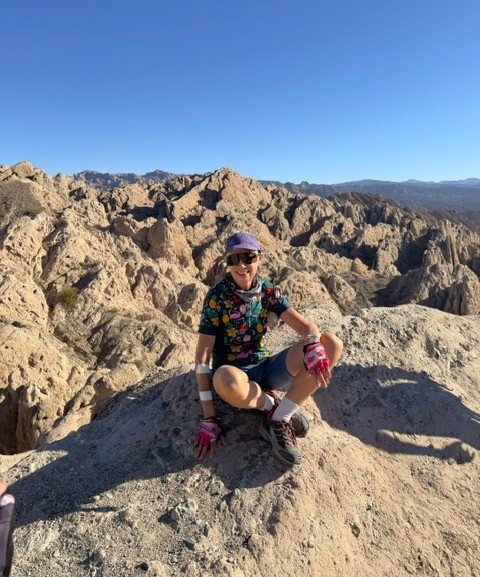 Bernie Sheehan, Onetangi, New Zealand
This was an absolutely brilliant trip filled with extraordinary scenery and non-stop adventure. Every day offered something completely new, from stark deserts to lush forests and majestic mountains. While the route included a bit more gravel than I would have preferred, it certainly made the tarmac sections feel fantastic. Our tour leader, Alejandro Moreiras, is exceptional. He is easily one of the best guides I have ever encountered, and he made every single day a delight. He led a highly motivated, tireless support crew: the amazing Belu, a fantastic cyclist who prepared divine picnic lunches, and Javi, our fantastic driver and photographer. Nothing was too much trouble for this hardworking team, and they looked after everyone beautifully. Northern Argentina is absolutely stunning. The trip was impeccably organised to ensure a wonderful variety of experiences and accommodation in amazing places. Highly recommended.
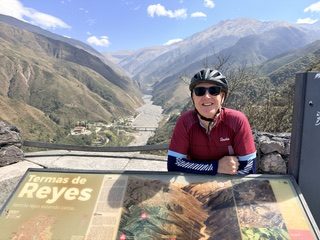 Paul Aynsley Colwyn Bay, Wales, UK
An amazing cycling trip with absolutely spectacular scenery that varied each day. The bikes were excellent for both the tarmac and gravel roads. Claudio was a fantastic guide, passionate and knowledgeable about the history of the region, and we were brilliantly supported by Javi and Belen, who were always smiling, enthusiastic and helpful. I came away with some fabulous memories
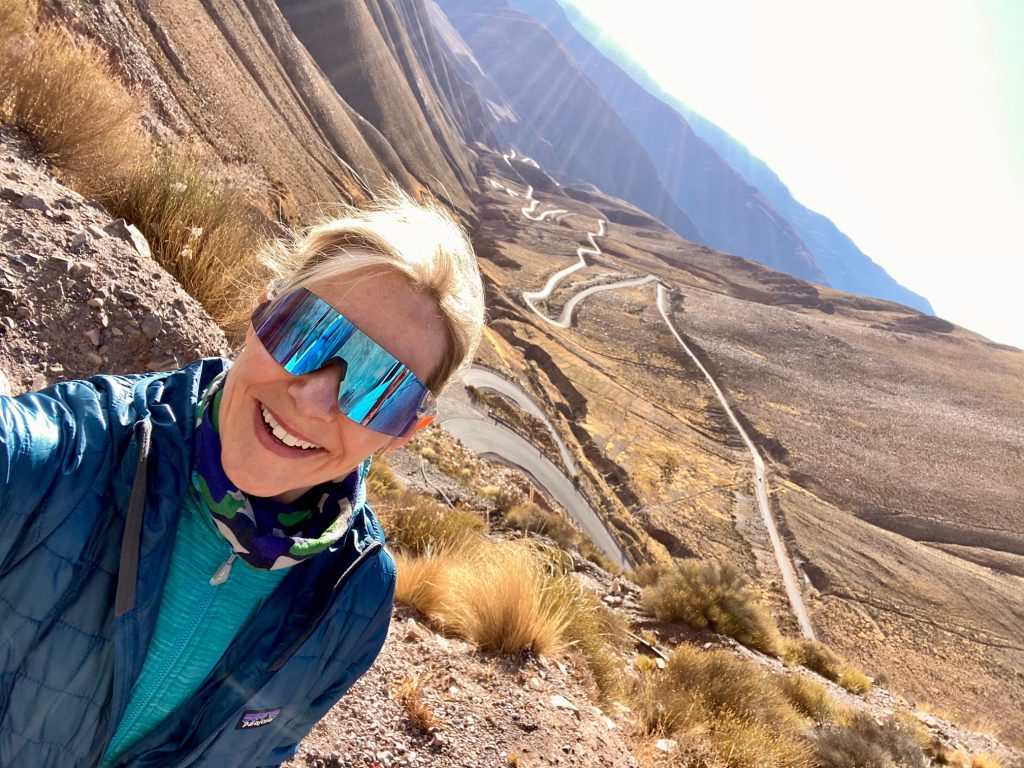 Astrid Hartland York, England, UK
Fantastic trip with incredibly varied landscape every day. Good mix of gravel and road on good quality Specialized bikes. Blended riding and culture nicely with passionate local guides.
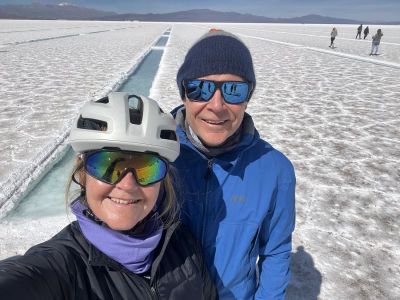 Tim Johnson , Burley in wharfedale, England, UK
A fantastic trip to part of Argentina we knew so little about. Almost every day was a WOW day. Stunning scenery, locations and things to do, with a very professional support team. Claudio and Yal were very good and as a consequence everything worked like clockwork. We’re tempted to say do this trip instead of popular Patagonia, but having done both, so should anyone reading this review.
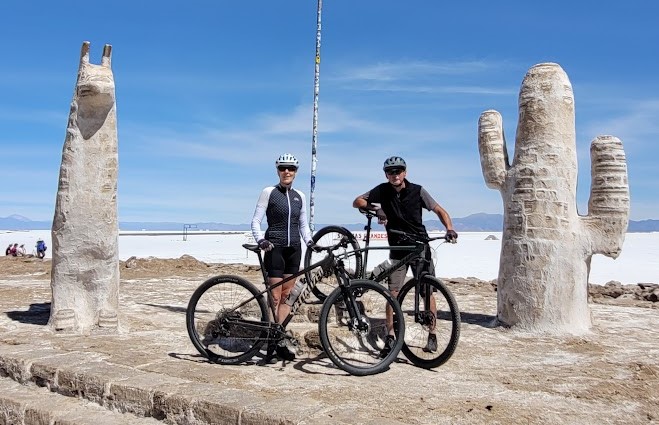 Karin and Sten, Goteborg, Sweden
The Northern Argentina tour delivered breathtaking mountain scenery, long and scenic stretches of gravel and tarmac ideal for cycling, and fascinating stories about the region’s rich history. Our excellent guides, Yale and Claudio, thoughtfully selected stunning spots for coffee breaks and picnic lunches, adding a special touch to the journey.
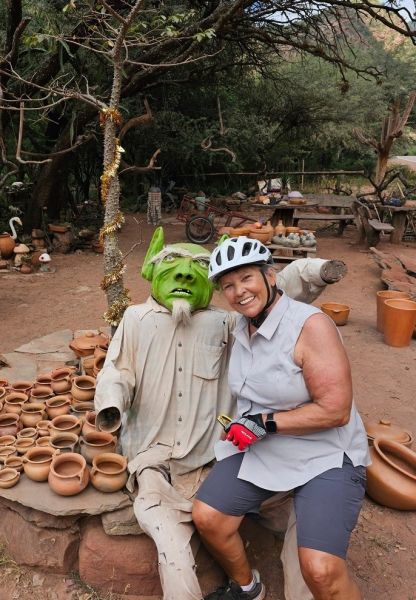 Barbara Sutherland, Edmonton, Alberta, Canada
I have been and sent people on bike tours throughout the world and with several different companies. This was fabulous. The itinerary was great bringing something new everyday. The surroundings were incredible and no picture can do it justice. The leaders were so enthusiastic and excited for all of us to see the best of their country. Ale was knowledgeable about every aspect we had questions about and more…from rock and salt formations to the best wine. A wealth of knowledge and made it interesting and fun. All went above and beyond to ensure we were all taken care of.
I speak as one who broke my collarbone (my silly mistake) but could not have asked for better care, Claudio was with me the whole way. The North of Argentina is a must. As a Western Canadian, we see lots of mountains, snow, lakes as in Patagonia but the North is a whole new world. A must to experience.
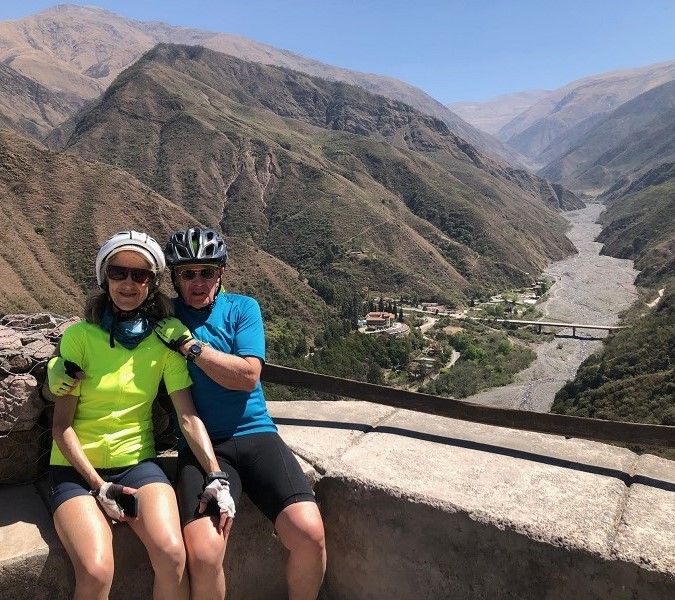 Jonas Barter, Almonte, Canada
Even before I signed up for this trip, I had to ask myself … What the hell’s a Puna? I learned that it’s a unique plateau in the Andes mountains. Getting up to and off of the Puna was hard work and my lowest and highest gears got a good workout. The highlight for me was the day that featured a 30 km downhill where I hit 57 kph on a mountain bike. Yikes!
Our guides were very attentive and we stayed in wonderful hotels with tons of character and great food (and wine). Thanks redspokes!
-e1782665973402.jpeg) Audrey Midgley, Ilkley, UK
Audrey Midgley, Ilkley, UK
We have been on many cycling tours over the years but this one stands out as the absolute best. The scenery was exhilarating and the people, food, wine and accommodation was amazing. Our guides were the best we have ever had and they couldn’t do enough to look after us and improve our experience at every opportunity. I wish we could take them with us on every tour.
It really was an amazing trip and people need to know about it!!!
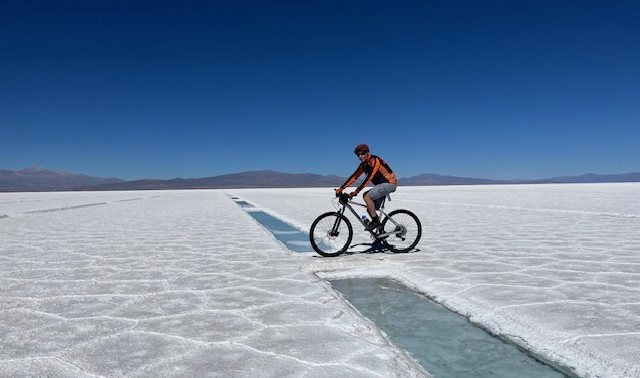 Allan Hilder, Southampton, England, UK
Guides were excellent, informative and fun. Magical diverse range of scenery and felt fully engaged with the culture of North Argentina.
The optional visit to Colombe Winery was a highlight. Well organised and a great group too.
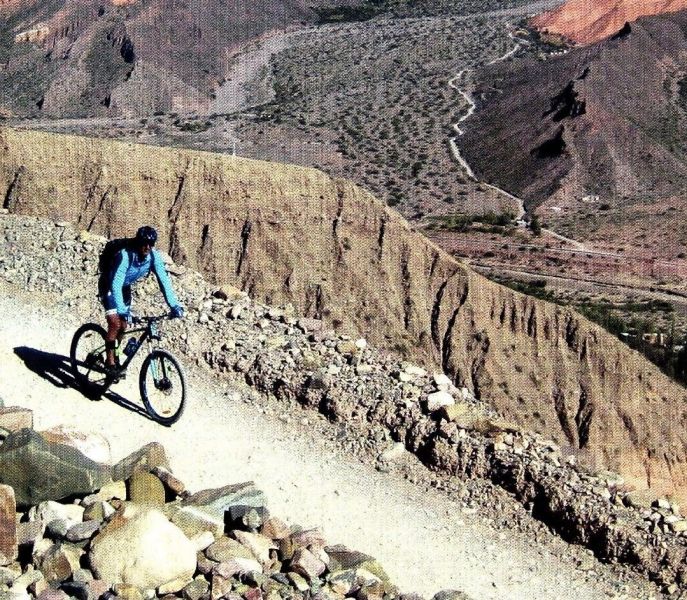 Keith Aungiers, Newcastle upon Tyne, England, UK
This was my first ever organised and fully supported cycling holiday. It was also the best cycling holiday that I have ever had. The wild and wonderful scenery, mile after mile of great roads, the quality of accommodation, the picnic lunches and other food and wine, and the camaraderie that the group developed were what made the trip memorable. It was the personal attention and friendship of your 2 extraordinary and dedicated guides – Yal Croce and Ale Moreiras – that made the trip so special.
 Lon Dubey, California, USA
North Argentina trip was fantastic. It included spectacular vistas of red rock canyons, gentler views of vineyards & farmland and a high altitude ride to and on a giant salt flat. Riding at altitude with wind gusts and also on fair amount of gravel roads was challenging at times but well supported by our two exceptional guides, Ale and Yal. They were well organized extremely helpful and knowledgeable and also a lot of fun. They worked well as a team and they offered many insights into Argentinian culture. We had several interesting stops including a tour of the salt flat mining, wine tasting, weaving and visit to a couple of pre Inca archaeologic sites. Overall, recommend this trip highly. Only proviso would be participants be comfortable riding on gravel roads.
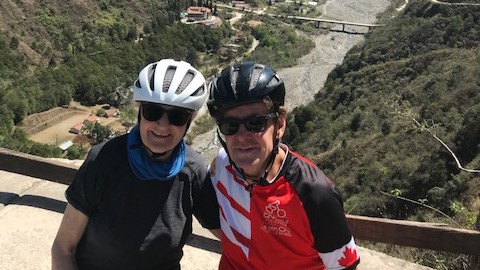 Stephen and Kathryn Cotnam, Almonte, Canada
This was our second trip with red spokes. We were very well looked after. Our leaders and guides were well informed with a good knowledge of the area and responded well to our sometimes changing needs.
They were very positive and encouraged us in our cycling and they were fun to travel with. Thank you for the opportunity to travel in style and comfort.
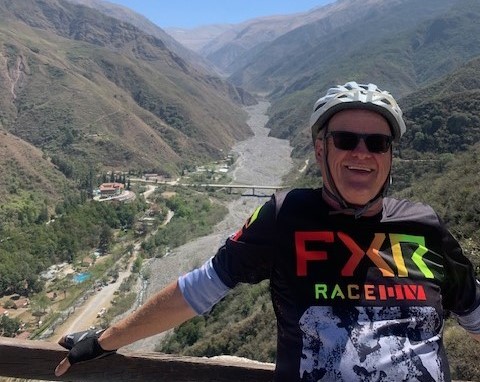 Andy Cotnam, Ontario, Canada
Yal and Claudio are excellent guides,very proud and informative about Argentina. They really looked out for us ensuring a great,safe trip for us all.Our bikes seemed brand new and were great rides.
Exciting,challenging days and another amazing Red Spokes adventure!
Mucho Gracias!!
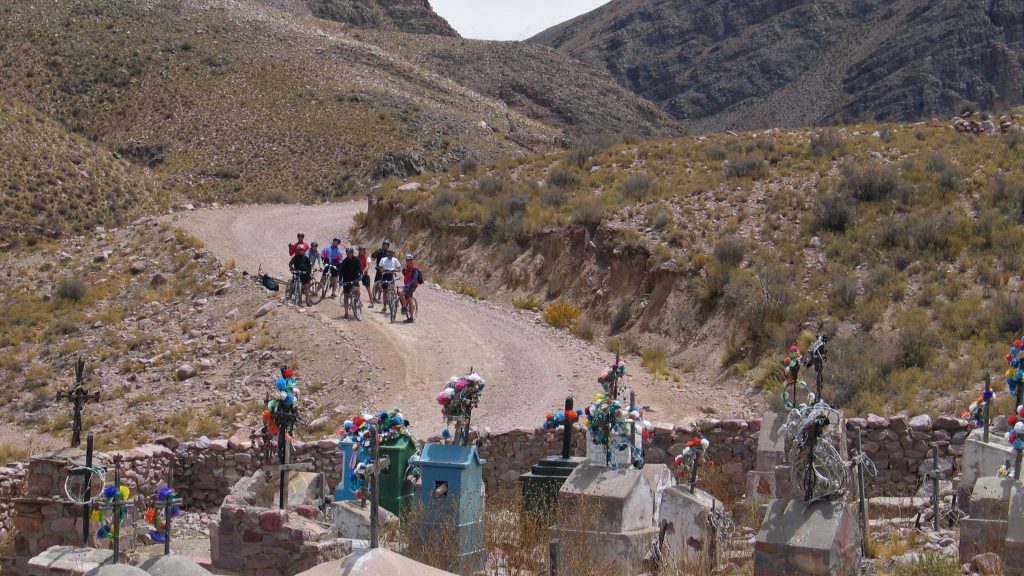 Sebastian and Claire Krause, Wellington, New Zealand
We had an absolutely fantastic time in Argentina. It’s a stunning country, filled with incredibly warm and welcoming people, including our exceptional guide and drivers. The tour allowed us to explore numerous facets of Argentina’s rich culture and heritage. This entire experience was expertly organized by redspokes, ensuring that the cycling was enjoyable and manageable. It’s an adventure we will cherish forever.
 Rob and Carla, Pincher Creek, Canada
A fantastic trip. Great guides. Quality bikes that were well suited to the conditions. Extremely varied and interesting sights all within a short distance from one another. Great weather.
 Anna & Peter Murphy, Manchester, England, UK
redspokes has a knack for bringing together like-minded individuals, and while our entire adventure in Argentina was already fantastic, the wonderful people I shared it with made it even more enjoyable. It truly was a once-in-a-lifetime journey filled with countless cherished memories. I often find myself revisiting the photos to relive the moments. Meeting such lovely people, both fellow travelers and the organisers, was a highlight in itself.
I’m not sure if any experience can surpass this one, but I’m certainly eager to explore another destination and see if it can. Thanks again for the incredible journey!
 Janet and Oliver Young, Otago, New Zealand
Redspokes Northern Argentina was a wonderful trip shared with a great group of fellow cyclists. The scenery was spectacular and a fabulous area to explore by bicycle. Ale, Yal and Claudio were exceptional in their professionalism as tour leaders as they made sure everyone was so well looked after.
The hotels exceeded expectations and the food was in abundance especially if you like beef, dulce de leche and wine…. We highly recommend this cycling adventure.
 "Dee" de Wit, Lincolnshire, England, UK
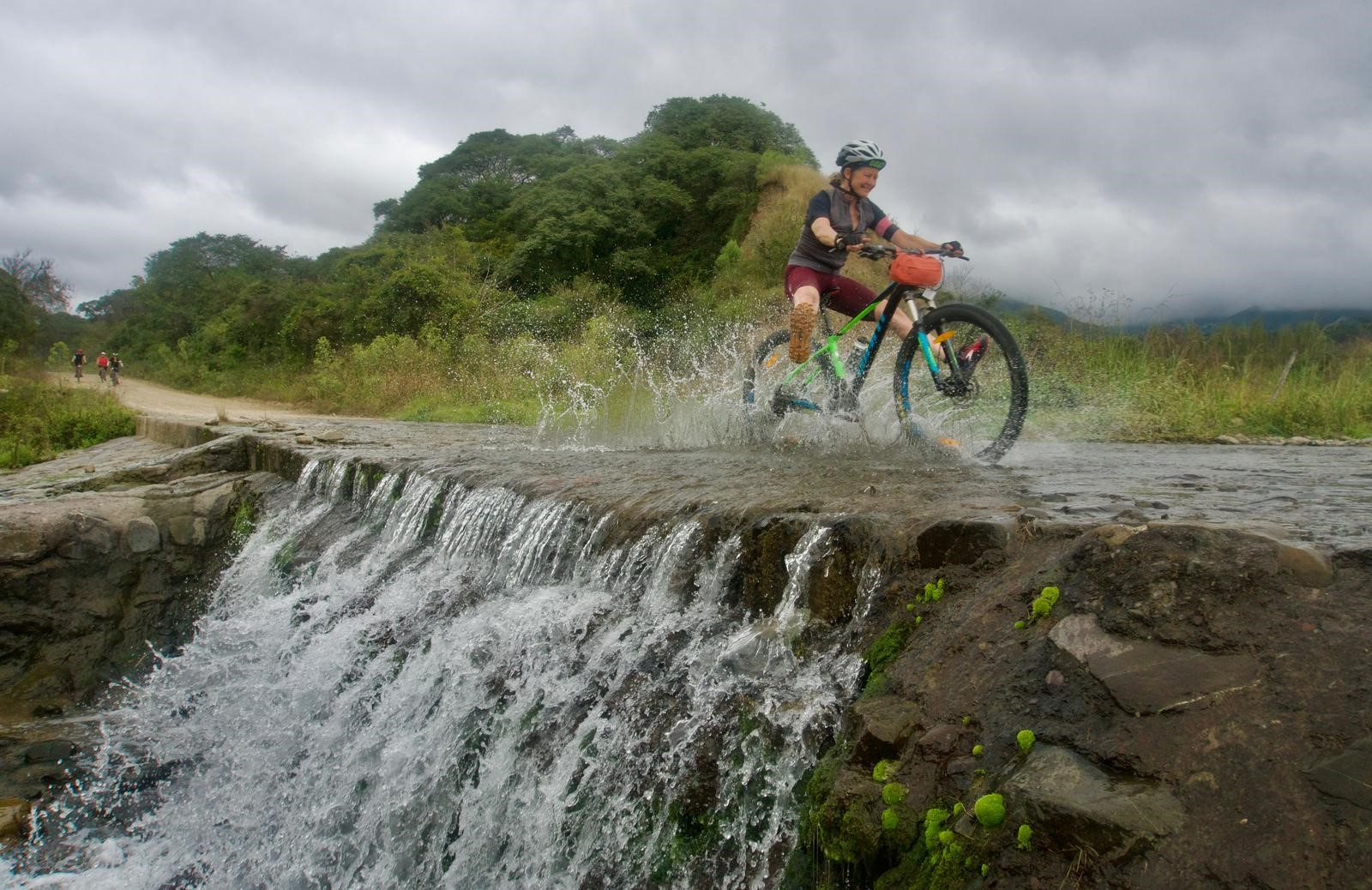
I was the slow one but Ale and Yal never left me behind, always offered encouragement and yet allowed me take my time. Much of the trip was on dirt roads ('ripio') which made the going tough … but it's the only way to see those amazing landscapes.
Lunches were superb. With the benefit of hindsight I'd have hired an electric bike.
 Arden Travers, Maryland, United States
My husband and I chose redspokes Northern Argentina tour because it is a rather remote area that we really wanted to see and biking would give us that perspective. Prior to the trip I looked at a few photos online but nothing would compare to actually being there – we took aver 2,500 photos as every corner was more spectacular. Each day on the bike was a different experience – beautiful roads with little traffic thru the wine vineyards, the national park full of hundreds of cactus, a 4 meters wide winding downhill route, to gravel and sand thru streams and farm land.
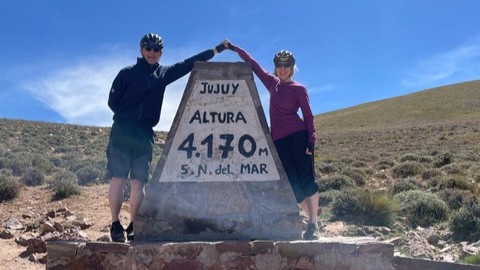
The most spectacular was the day to the Big Salt Plain starting from the pass at 4,170 meters = 13,681 feet descent. After lunch we rode in the van back to the top of the same pass and rode down the other side with 30 k of dramatic switchbacks. Our guide Alehandro “Ale” was superb- he has an infectious enthusiasm and was happy to accommodate any request. Since we returned home we can’t rave enough about this trip.
.jpg) Bob Travers, Maryland, United States
Bob Travers, Maryland, United States
“It was a bicycling trip in Northern Argentina that took us into rainforest through extreamly high 13,700 passes and then into desert and salt plains. We rode through dramatic ravines, the Andean puna and dazzling white salt flats under cobalt blue skies.
redspokes Northern Argentina tour is rich in Andean culture, clement weather and challenging cycling”. See Bob’s Travel Blog for more details of this trip!
 Brian Copestick, St Albans, England, UK
Excellent trip in stunning, diverse landscapes. The guides transformed trip from good to great.
.JPG) Eli Baron, Plano, Texas, United States
Eli Baron, Plano, Texas, United States
Scenery was exceptionally beautiful and different every day. Guides did an excellent job. In addition to bicycling in the midst of beautiful and scenic views, we had the opportunity to visit historic sites and wineries and experience life in the mountains of northern Argentina.
 Michael Jackson, Bradford, England, UK
Another great trip from Redspokes, the rides, accommodation and support team are the best. More trips like this please.
 Ho Nyuk Chee, Kuala Lumpur, Malaysia
Our guide and driver, Taiel and Marcello were very helpful,knowledgeable and fun to be with. The bikes were first class. The cycling route was very scenic with little traffic although there was a section from the top of Piedra Molinas to the bottom which can be very dusty even if a single car passes.
.jpg) Gregor McPherson, Glasgow, Scotland
Gregor McPherson, Glasgow, Scotland
The guys did a tremendous job and were endlessly patient. The cultural insights were an added bonus.
 Gerard Veglio, London, UK
A terrific tour with lots of varying scenery, shortish distances, a couple of hard days and some surprisingly excellent hotels which rounded off some amazing days in the saddle. The guides really looked after us, from keeping everyone supplied with water and snacks, and taking care of all the punctures. In hindsight I wished I’d added a couple of days at the end to enjoy Termas de Reyes and the surrounding area.
 Dr Graeme Cameron, Denver, Colorado, USA
Cycling through Argentina was an absolute thrill, and the experience was elevated to new heights thanks Taiel and Marcello, our guides, were the heart and soul of the adventure. Their passion for cycling and in-depth knowledge of Argentina’s culture and geography added a rich layer to our journey.
From charming local villages to picturesque vineyards, every pedal stroke felt like a discovery. Cycling in Argentina is not just a physical adventure; it’s a cultural and sensory delight. Highly recommend it to anyone seeking an active and immersive travel experience!
Photos – Argentina
Here are a selection of photos for our ‘Argentina’ Cycling holiday.